In today’s fast-changing financial services landscape, Registered Investment Advisor (RIA) firms and Bank Trust Departments face a critical challenge: delivering sophisticated investment strategies and outstanding client service—often with fewer resources than large national competitors. To remain competitive and cultivate sustainable growth, many forward-thinking firms are partnering with an outsourced Chief Investment Officer (OCIO). This solution provides institutional-quality investment management at a fraction of the cost—typically $180,000 to $230,000 annually, according to Cornerstone Research—compared to hiring an equally skilled in-house CIO and support team. For these agile firms, the shift isn’t just about keeping pace; it’s about strategically positioning themselves to outperform and compete well above their weight class.
Why do smaller RIAs and trust departments struggle to staff the investment function?
Unlike large wealth management enterprises, smaller RIAs and bank-affiliated trust departments often operate with lean teams and limited budgets. Hiring top-tier internal Chief Investment Officers (CIOs), along with the required technology and staffing, is frequently cost-prohibitive. Yet, without expert guidance in areas like asset allocation, manager selection, and market forecasting, these firms risk falling short of client expectations and growth ambitions.
How does an outsourced CIO help smaller RIAs and trust departments?
In response, a growing number of forward-thinking firms are adopting a transformative strategy: partnering with an outsourced Chief Investment Officer (OCIO). This approach enables access to institutional-caliber investment management expertise at a fraction of traditional hiring costs—typically $180,000 to $230,000 annually, according to Cornerstone Research. The OCIO model is especially attractive for organizations that want to remain competitive, improve client outcomes, and still maintain a flexible cost structure.
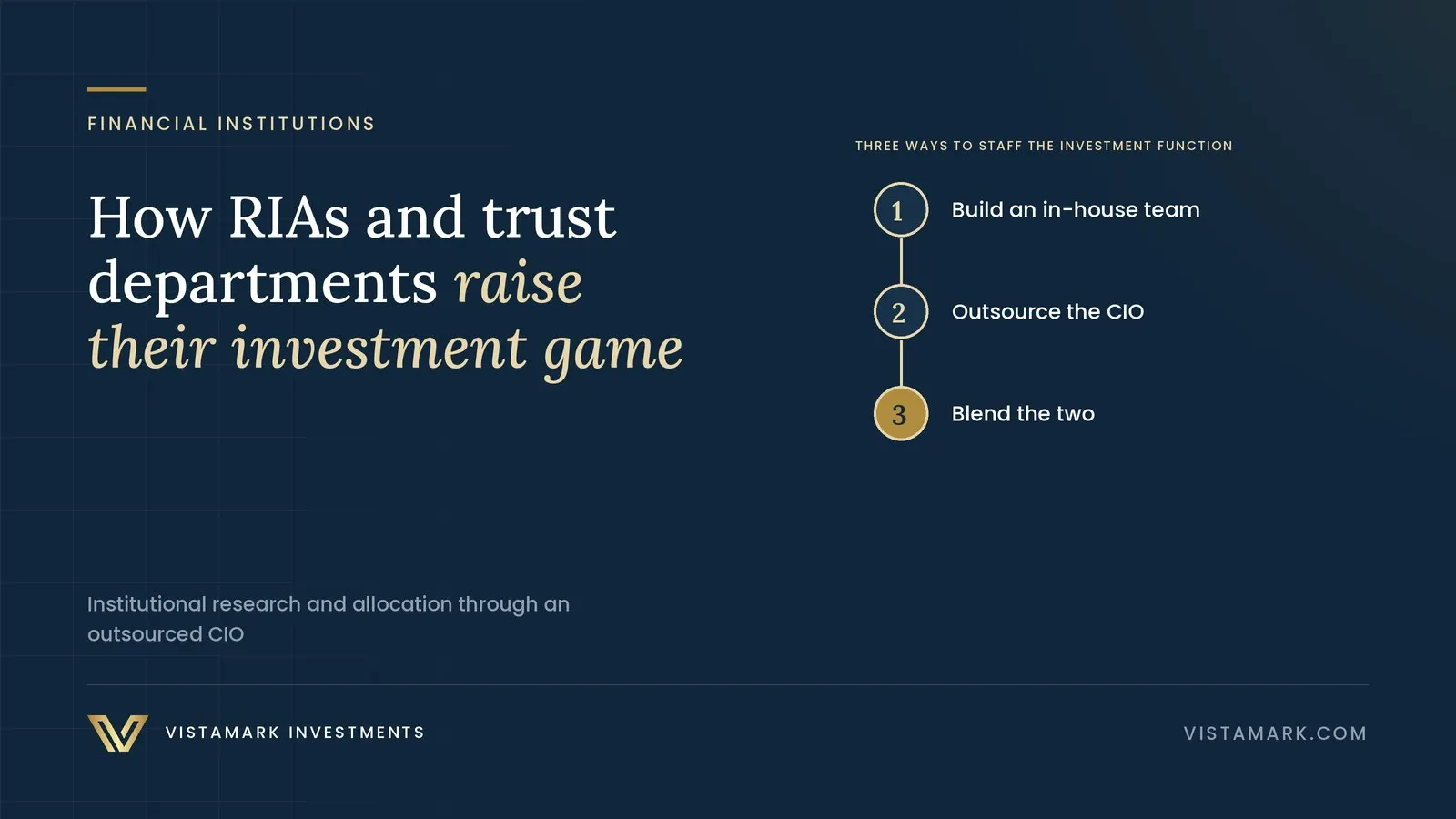
Three ways to staff the investment function
In-house CIO and team Outsourced CIO TAMP / model marketplace What you buy Employees: a credentialed lead, analyst support, research and rebalancing technology An investment department on retainer: assumptions, allocation, research, rebalancing discipline, a senior person accountable to your committee Administration and a shelf of model portfolios Typical cost Salaries, bonus and benefits for the team, plus subscriptions and technology Roughly $180,000–$230,000 a year for a full relationship (Cornerstone Research), scaled to service level Basis points on platform assets, often bundled with custody or reporting Customization Full Full, within your investment policy Limited to the shelf Accountability when a client doesn’t fit the model Your staff A named senior CIO Your advisors Best for Firms above roughly $1–5 billion where the function pays for itself Firms of $100 million to $5 billion; banks and trust departments; family offices Firms that need administration more than judgment
Key Benefits of Outsourced CIO Partnerships
| In-house CIO and team | Outsourced CIO | TAMP / model marketplace | |
|---|---|---|---|
| What you buy | Employees: a credentialed lead, analyst support, research and rebalancing technology | An investment department on retainer: assumptions, allocation, research, rebalancing discipline, a senior person accountable to your committee | Administration and a shelf of model portfolios |
| Typical cost | Salaries, bonus and benefits for the team, plus subscriptions and technology | Roughly $180,000–$230,000 a year for a full relationship (Cornerstone Research), scaled to service level | Basis points on platform assets, often bundled with custody or reporting |
| Customization | Full | Full, within your investment policy | Limited to the shelf |
| Accountability when a client doesn’t fit the model | Your staff | A named senior CIO | Your advisors |
| Best for | Firms above roughly $1–5 billion where the function pays for itself | Firms of $100 million to $5 billion; banks and trust departments; family offices | Firms that need administration more than judgment |
-
Institutional-Level Expertise: OCIOs bring seasoned investment professionals with deep backgrounds in risk management, strategy development, and performance analysis, often rivaling larger firms’ capabilities.
-
Cost Efficiency: Partnering externally eliminates hefty salary expenses, bonuses, and benefits linked to full-time CIOs and supporting staff.
-
Scalability and Flexibility: Firms can align the scope of services with current needs—expanding or contracting based on market dynamics and business goals.
-
Regulatory and Operational Support: Many OCIO providers assist with compliance, reporting, and operational best practices, crucial for meeting heightened fiduciary standards.
Real-World Impact: Punching Above Their Weight Class
This strategic shift is not just about survival—it’s about empowerment. Smaller advisory firms find themselves equipped to rival much larger players in portfolio construction, research, and manager due diligence. The visibility of an experienced OCIO partner can also enhance client trust, signaling a commitment to best-in-class performance and risk oversight.
What should a firm consider before outsourcing its CIO function?
Before making the leap, firms should:
Assess Current Gaps: Identify areas where internal capabilities fall short—such as alternative investments or ESG integration—and see how OCIO partners can fill those needs.
Vet Providers Thoroughly: Review methodologies, client references, performance reporting formats, regulatory compliance history, and technology integration.
Align on Communication: Ensure clear lines of accountability and reporting, so clients understand the value delivered by both the advisory firm and its OCIO partner.
Weigh the ROI: Consider not just direct cost savings, but also opportunity costs, retention benefits, and the value of having a scalable solution ready as the firm grows.
The Path Forward
For ambitious RIAs and trust departments determined to accelerate growth without compromising quality, the outsourced CIO model represents a savvy, future-forward choice. By leveraging outside expertise, these firms can control expenses, deepen client relationships, and punch well above their weight class in a highly competitive market. As demands rise and margins tighten, strategic partnerships with OCIOs could be the key differentiator that transforms challenges into opportunities for long-term success.
For more information and personalized guidance, please feel free to reach out to Vistamark Investments. You can contact us at 312-895-3001, visit our website at vistamark.com, or send us an email to info@vistamark.com.
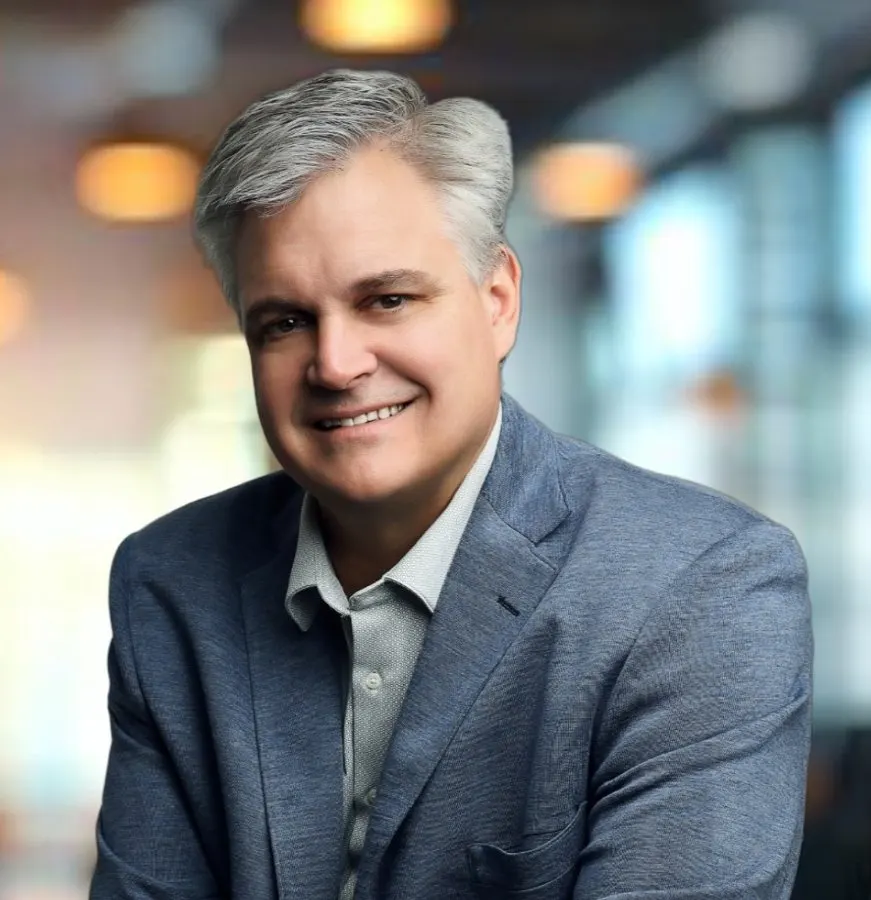
Founder and CIO of Vistamark; as CIO of Fiducient Advisors, oversaw investment strategy for more than $260 billion in client assets. More about Matthew →
This article is for informational and educational purposes only and does not constitute investment, legal, tax or accounting advice, or an offer or solicitation to buy or sell any security. Views are those of the author as of the publication date and are subject to change. Vistamark Investments is an SEC-registered investment adviser; see our disclosures.