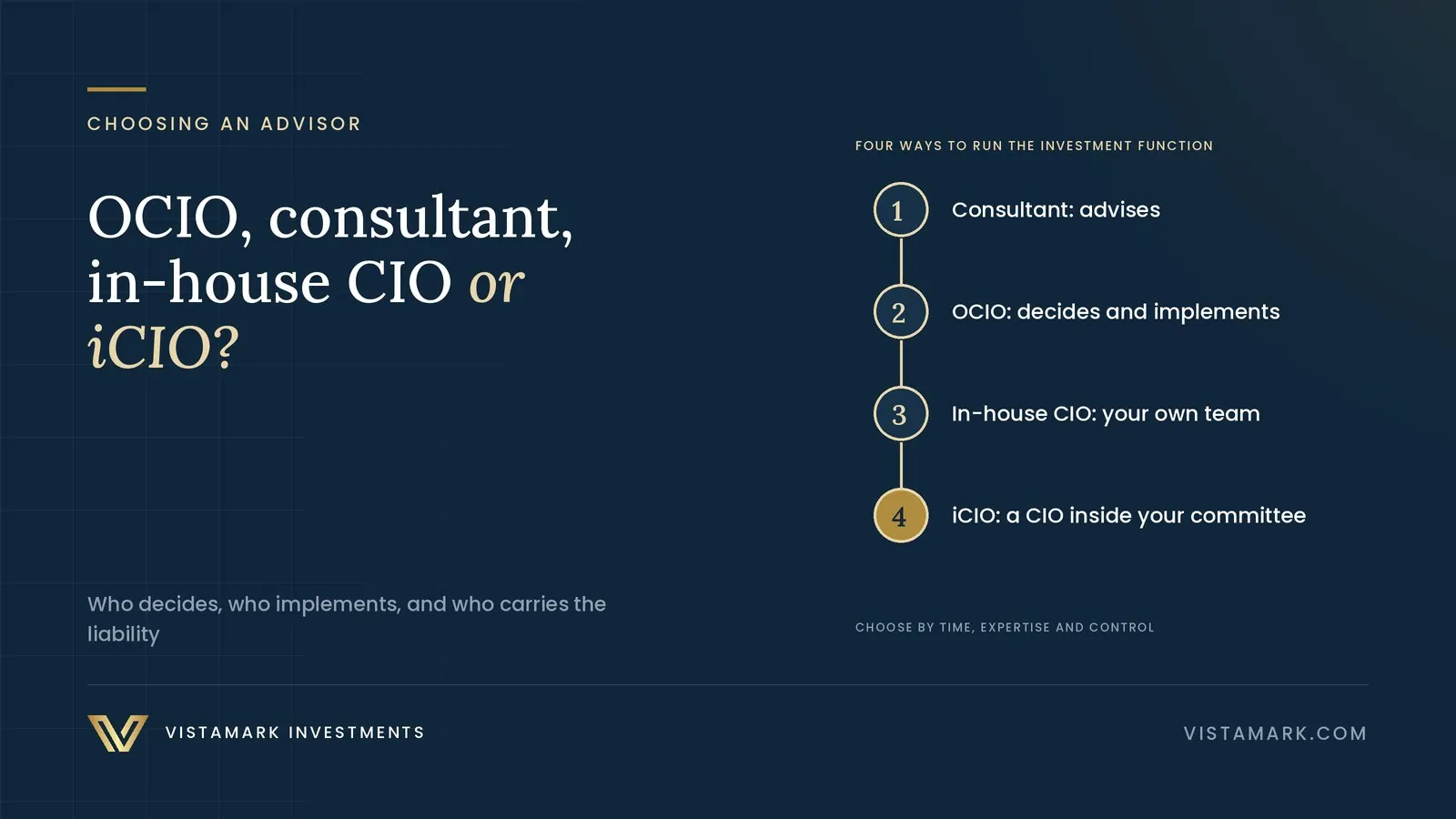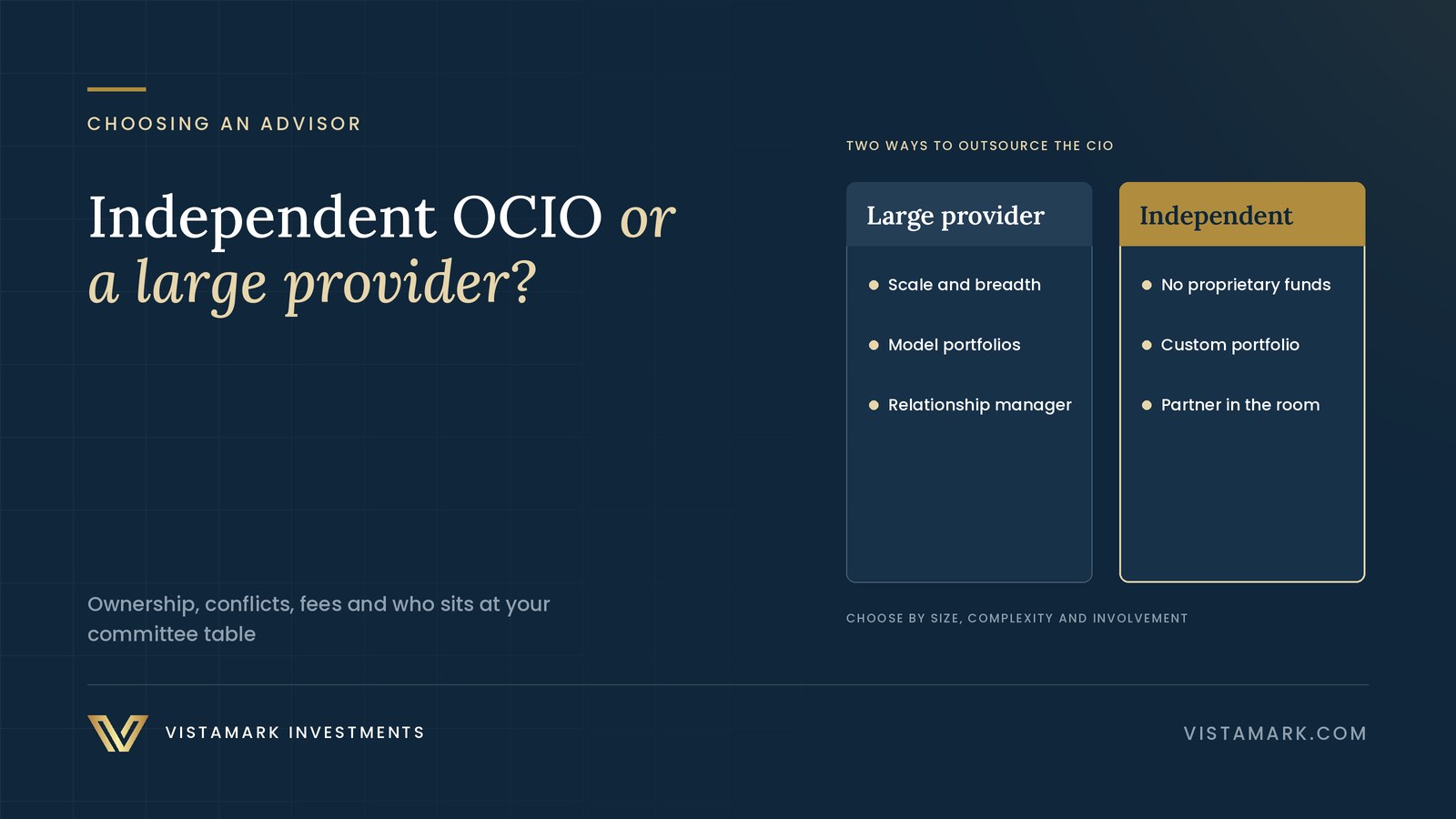
The short answer. A large OCIO provider is usually the better fit for an institution that wants one firm to run everything at scale, including a big private-markets program, and is comfortable with standardized portfolios. An independent, partner-led OCIO is usually the better fit for a foundation or endowment that wants senior attention, a portfolio built for its own spending and mission, and as few conflicts of interest as possible. Most committees can tell which they are by answering the questions below.
How concentrated is the OCIO market?
OCIO providers managed about $4.79 trillion worldwide in 2024, across 134 firms researched by Chestnut Advisory (PLANADVISER, March 2025). The five largest each managed more than $200 billion, and together they held roughly 38% of the total. Most of those assets come from corporate pension and retirement plans: corporate defined benefit plans were 52% of OCIO assets in Cerulli’s 2022 study (Cerulli). Cerulli also found that providers serving pension plans need new capabilities for endowments and foundations, including deeper private-investment teams and more committee education.
How do large OCIO providers and an independent OCIO compare?
| Question | Large OCIO provider | Independent OCIO (Vistamark) |
|---|---|---|
| Who owns the firm? | Often part of a bank, asset manager, insurer or consulting group, or owned by private equity | 100% employee- and partner-owned, independent |
| Whose funds go in the portfolio? | Varies: some use their own funds or alternatives vehicles alongside outside managers | Outside managers only; no proprietary funds |
| How is the fee charged? | Usually basis points on assets, sometimes plus fees inside proprietary vehicles | One advisory fee, asset-based (AUM) or flat, negotiated for each engagement; nothing earned from products |
| Who attends your committee meetings? | A relationship manager, with specialists on request | A partner, at every meeting |
| How custom is the portfolio? | Often built from the firm’s model portfolios | Built around your spending policy, liquidity needs and mission screens |
| Breadth of resources | Large research staffs, global manager coverage, scale pricing | Smaller team; relies on partners’ experience and outside research |
| Private markets access | Often extensive, sometimes through the firm’s own pooled vehicles | Access through outside managers and funds |
Do proprietary products create a conflict?
They can. When the OCIO also manages funds, it may favor its own products over a competitor’s, and some firms now charge performance fees inside their own alternatives vehicles (Institutional Investor, April 2022). Large providers say they wall off manager selection from the rest of the firm, and many do. The committee’s job is to ask, in writing: which funds in our portfolio are yours, and what does each one earn you? Our Ten Questions to Ask an OCIO start there.
Does ownership matter?
It matters to how the firm is run over time. Independent OCIOs are being acquired by larger firms and private equity investors (Institutional Investor, above), and new owners with return targets can change pricing, staffing or product use. Ask who owns the firm today, whether that has changed in five years, and what happens to your team if it changes again. Vistamark is owned by the people who work here.
Will you get senior attention?
Scale has a cost at the committee table: at a large provider, a mid-size foundation is one client among many. At Vistamark, every relationship starts with a partner-level conversation, and a partner leads it from there and attends every investment committee meeting. Ask each finalist to name the people who will attend your meetings, and how many other clients each of them covers.
When is a large OCIO the better choice?
- Your portfolio is large and complex enough to use a big global research staff.
- You want a single firm for investments, custody, benefits administration or actuarial work.
- You want a large, diversified private-markets program built through the provider’s own vehicles, and you accept the fees that come with it.
- Your committee prefers a standardized, model-based portfolio and quarterly oversight.
When is an independent OCIO the better choice?
- You want the people who design the portfolio in the room with your committee.
- Your spending policy, liquidity needs or values-based screens call for a custom portfolio.
- You want no proprietary products and a single advisory fee, with nothing earned from the funds you hold.
- You want to keep the option of changing providers without unwinding in-house funds.
How should a committee decide?
Run a short, fair search: send every finalist the same RFP, ask for fees in dollars on your actual portfolio, and score the answers the same way. Our OCIO RFP template has the questions, a fee disclosure schedule and a scoring matrix. For the other models, see OCIO vs. Investment Consultant vs. In-House CIO and How OCIO pricing actually works. Vistamark’s approach for foundations and endowments is on our Foundations & Endowments page, and our fee structure is on Our fees.
Sources
- PLANADVISER — OCIO Market Totals Nearly $4.8T, Says Chestnut Advisory (March 6, 2025)
- Cerulli Associates — OCIO Providers See Greater Demand Ahead from Nonprofits and Health and Hospital Systems (February 8, 2022)
- Institutional Investor — Is There Any OCIO Model That Is Conflict Free? (April 14, 2022)
This article is part of our Foundation & Endowment Investment Guide, which collects our writing on the topic with answers to common questions.
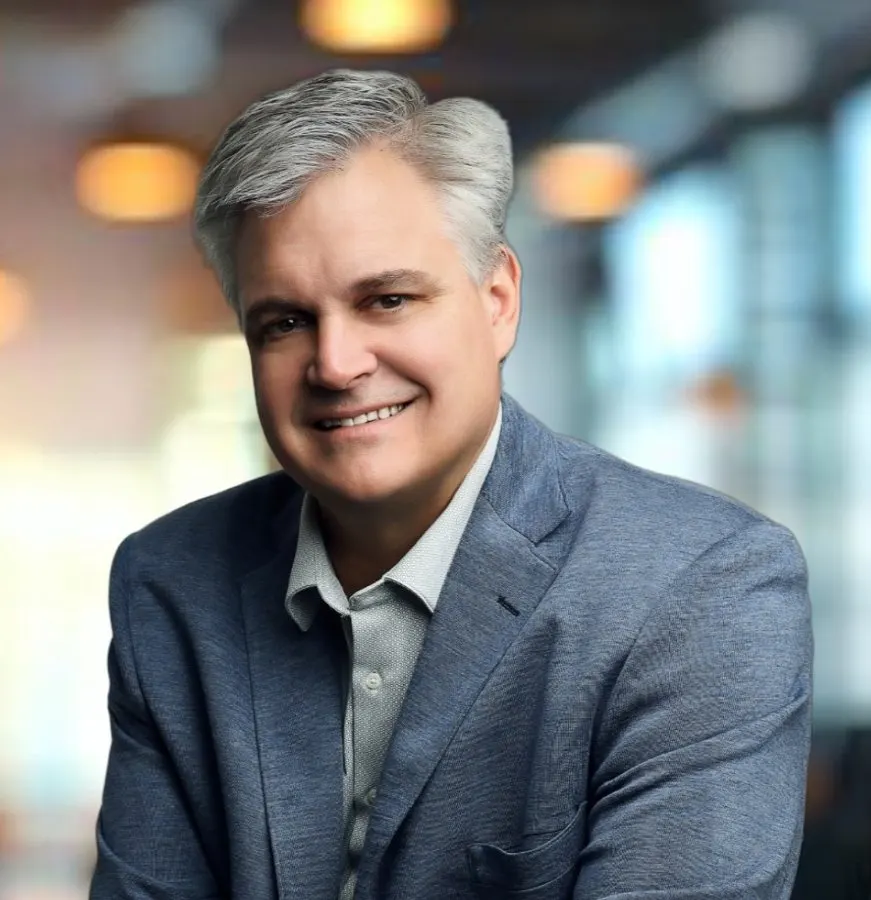
Founder and CIO of Vistamark; as CIO of Fiducient Advisors, oversaw investment strategy for more than $260 billion in client assets. More about Matthew →
This article is for informational and educational purposes only and does not constitute investment, legal, tax or accounting advice, or an offer or solicitation to buy or sell any security. Views are those of the author as of the publication date and are subject to change. Vistamark Investments is an SEC-registered investment adviser; see our disclosures.