A trust is only as good as the person or institution running it. The trustee will invest the assets, decide on distributions, keep records, file tax returns and, sometimes, say no to people they care about, possibly for decades. Yet trustee selection is often an afterthought, decided in a few minutes at the end of an estate planning meeting. It deserves more thought than that.
What does a trustee actually do?
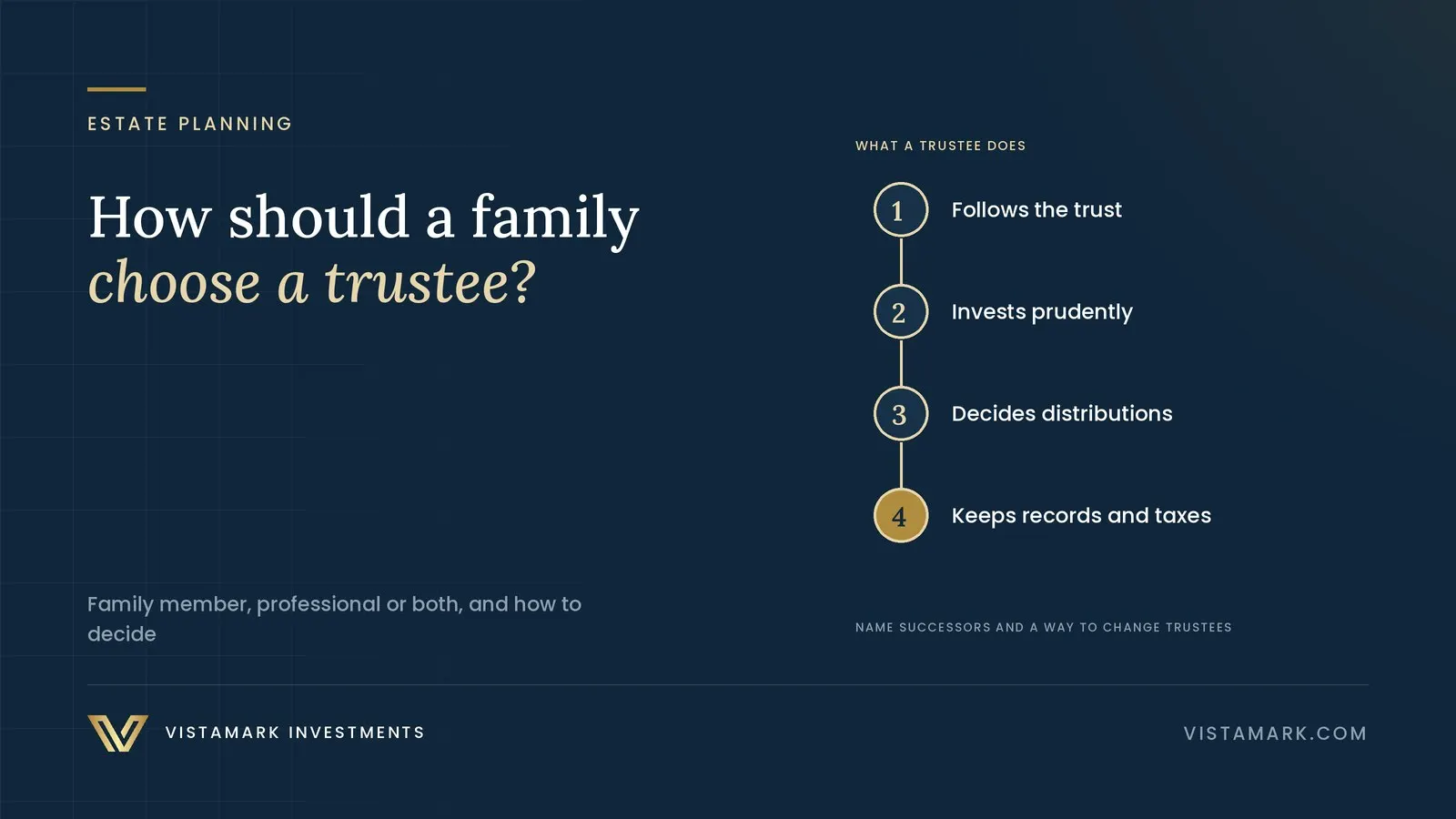
A trustee is a fiduciary who must follow the trust document and act in the beneficiaries' interests. The job includes:
- Investing prudently under the state's prudent investor rules, with a written investment policy.
- Making distribution decisions, often involving judgment about health, education, support and the beneficiaries' circumstances.
- Keeping accurate records and reporting to beneficiaries as state law requires.
- Filing trust tax returns and managing the trust's tax position.
- Treating beneficiaries impartially, balancing current beneficiaries against those who will inherit later.
What are the options?
| Family member or friend | Professional or corporate trustee | |
|---|---|---|
| Strengths | Knows the family and its values; usually inexpensive | Expertise, continuity, impartiality, administrative systems |
| Weaknesses | May lack time or expertise; family conflict; may die or become unable to serve | Fees; can feel distant; staff turnover |
| Best for | Simpler trusts and short time horizons | Large, long-lasting or complex trusts, or families with tension |
Can a family get the best of both?
Often, yes. Many modern trusts divide the job. A family member or trusted advisor serves as co-trustee or distribution adviser, bringing knowledge of the beneficiaries, while a professional trustee handles administration. Some states also allow directed trusts, in which an investment adviser chosen by the family manages the assets while the trustee handles everything else. A trust protector, an independent person with limited powers such as removing and replacing the trustee, adds flexibility over long time horizons.
What qualities matter most in a trustee?
- Judgment and integrity, including the willingness to make unpopular decisions.
- Availability over the life of the trust, which may outlast an individual trustee.
- Impartiality among beneficiaries, especially between children from different marriages or between generations.
- Financial competence, or the willingness to hire and oversee people who have it.
- Organization, because recordkeeping and tax filings are relentless.
Should a beneficiary serve as trustee?
Sometimes, with care. A beneficiary-trustee can create tax and creditor-protection problems if their power to distribute to themselves is too broad, and it can strain relationships with other beneficiaries. When a beneficiary serves, the trust usually limits distributions to an ascertainable standard such as health, education, maintenance and support, or adds an independent co-trustee for discretionary decisions.
What provisions should the trust include about trustees?
- A clear line of successor trustees, so the trust never needs a court to appoint one.
- A way for beneficiaries or a trust protector to remove and replace a trustee without litigation.
- Guidance on compensation and on hiring investment advisers and other professionals.
- A letter of wishes, which is not binding, explaining the family's intentions to help the trustee use discretion well.
How should a family decide?
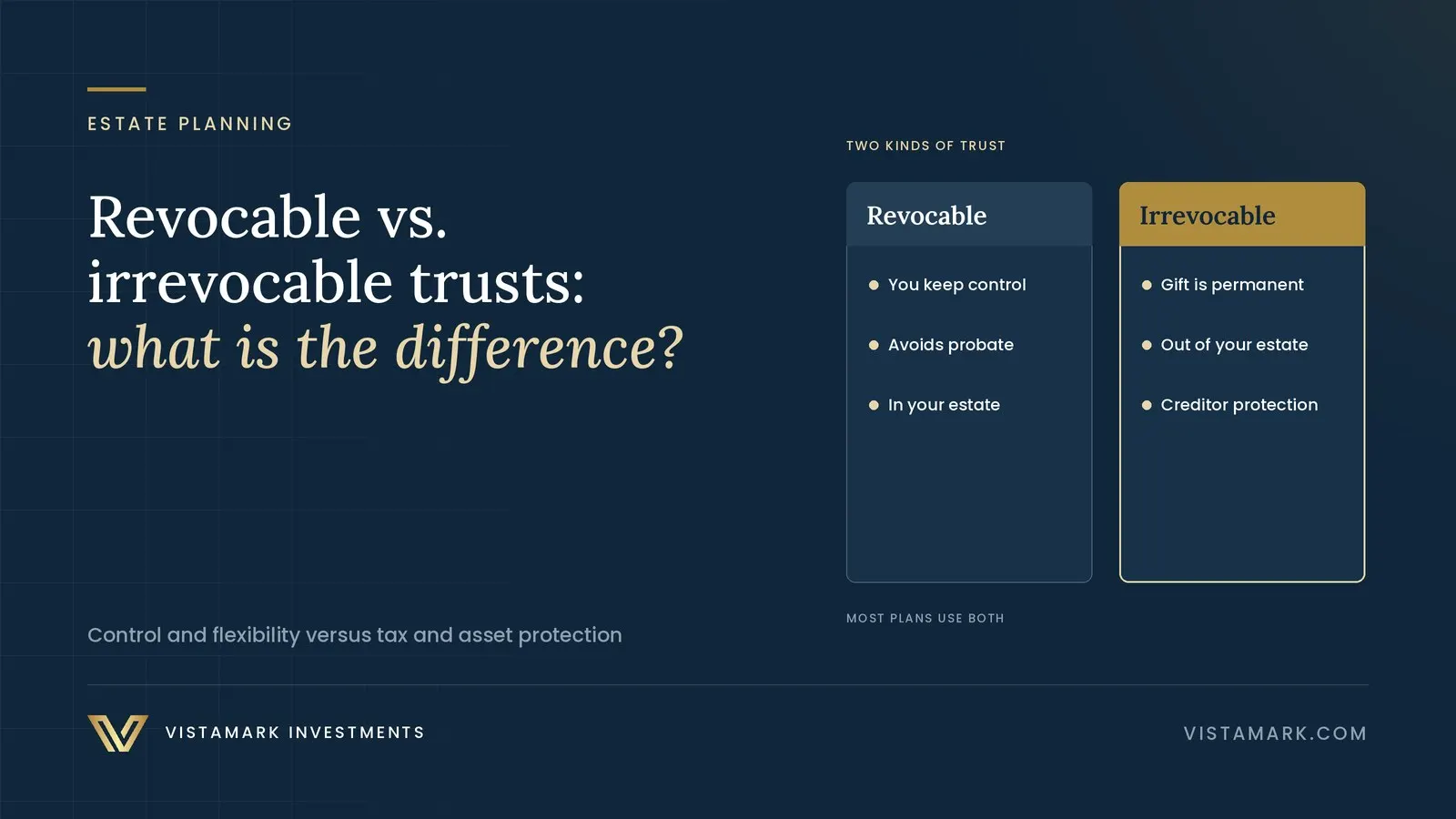
Start with the trust's purpose and expected length, the size and complexity of the assets, and the relationships among the beneficiaries. Talk to the person you have in mind before naming them; many people agree out of loyalty without understanding the job. Revisit the choice every few years, because the right trustee at 40 may not be the right trustee at 70. For more on how trusts work, see our guide to revocable and irrevocable trusts. The VistaWealth Office works with trustees and families to invest trust assets under a written policy.
This article is part of our Estate Planning Guide, which collects our writing on the topic with answers to common questions.

Managing Partner, VistaWealth Office™ — integrated wealth planning for executives, business owners, family offices and charities. More about William →
This article is for informational and educational purposes only and does not constitute investment, legal, tax or accounting advice, or an offer or solicitation to buy or sell any security. Views are those of the author as of the publication date and are subject to change. Vistamark Investments is an SEC-registered investment adviser; see our disclosures.