Thanksgiving week is when many families are together and money is on everyone's mind but rarely on the agenda. That is a missed opportunity. The families that keep their wealth across generations are not the ones with the cleverest investments; they are the ones that talk about money regularly, honestly and with structure. In Think Like a Family Office, family governance gets as much attention as portfolio construction because, over decades, it matters as much.
Why do families need formal meetings about money?
Because the alternative is surprise. Heirs who learn about the family's wealth, trusts and expectations for the first time at a funeral or a reading of the will are more likely to make poor decisions, resent each other and turn to litigation. Regular meetings replace secrecy with shared understanding. They let the senior generation explain its intentions while it can still answer questions, and let the next generation build the knowledge and judgment it will need.
Who should attend?
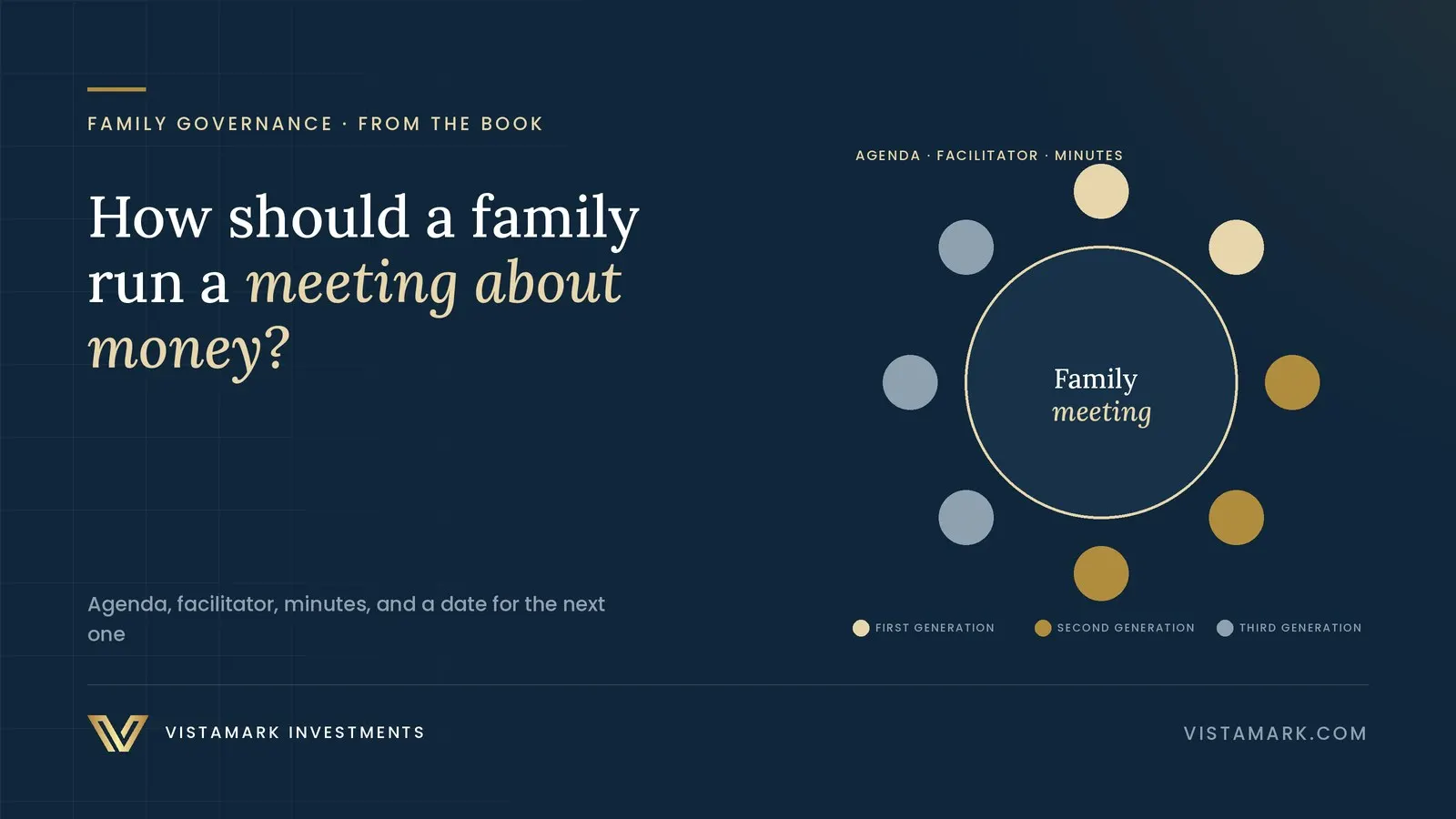
Start with the people who will be affected by the family's wealth decisions: the senior generation, adult children and, as appropriate, their spouses. Many families introduce grandchildren gradually, beginning with age-appropriate education sessions rather than full meetings. Whether in-laws attend is one of the first decisions to make, and families answer it differently; what matters is deciding deliberately and applying the rule consistently. Advisors should attend when they are presenting, not as permanent participants.
What should be on the agenda?
A good first meeting covers purpose before numbers. A typical agenda for an annual meeting might include:
- Family values and purpose. What the wealth is for and what the family hopes it will make possible.
- The big picture. How the family's wealth is organized: entities, trusts, the business, philanthropy, at whatever level of detail the senior generation is comfortable sharing.
- The year in review. How the portfolio performed against the family's goals, explained by the advisor in plain language.
- Education. One topic per meeting: how a trust works, how to read a statement, how the family evaluates investments.
- Philanthropy. The year's giving and how next-generation members can take part.
- Open questions. Time for anyone to raise concerns.
How much should parents tell their children about the family's wealth?
More than most do, but gradually. Children do not need every number at once; they need to understand that the wealth exists, what it is for, what is expected of them and how decisions are made. Many families share structure and principles first and specific values later, as children show maturity and take on responsibility. The goal is to avoid two failures: heirs who are unprepared because they knew nothing, and heirs who lose motivation because they knew everything too early without context.
Who should run the meeting?
Ideally someone neutral. When the patriarch or matriarch chairs every meeting, others often defer and real concerns go unspoken. An experienced outside facilitator, or an advisor who knows the family but has no stake in the outcome, can keep the discussion balanced and make sure quieter voices are heard. Over time, many families rotate the chair among family members as part of leadership development.
How do you keep meetings productive?
- Separate communication from decisions. Most family meetings should inform and educate. Decisions about investments, trusts and distributions belong to the people with authority to make them, under the family's investment policy and governance documents.
- Set ground rules. Confidentiality, listening without interrupting and no relitigating old disputes.
- Write things down. Brief minutes help everyone remember what was discussed and agreed.
- Meet regularly. An annual meeting with shorter check-ins is far more effective than a single meeting in a crisis.
When is a family ready for a family constitution or council?
When the family has grown large enough, or its assets complex enough, that informal agreement no longer works, often in the third generation or after a business sale. A family constitution records the family's values, how decisions are made, who can participate and how disputes are resolved. A family council is the group that carries out that framework between meetings. Neither has to be elaborate; a few clear pages agreed by everyone are worth more than a long document nobody reads.
Where should a family start?
Schedule one meeting. Keep the first agenda short, focus on purpose and values, and end by agreeing when you will meet again. That second date is the real beginning of family governance. Our family office self-assessment includes the governance questions from the book and is a useful agenda item in itself. The VistaWealth Office helps families plan and facilitate these conversations.
This article is part of our Family Governance Guide, which collects our writing on the topic with answers to common questions.
Market Compass · weekly
Get the Compass by email
One concise recap of the week’s market-moving events and what to watch next, written by our CIO at the end of each market week.

Managing Partner and Founder; advises families, business owners and family offices through the VistaWealth Office™ and leads Vistamark’s private markets research. More about Sean →
This article is for informational and educational purposes only and does not constitute investment, legal, tax or accounting advice, or an offer or solicitation to buy or sell any security. Views are those of the author as of the publication date and are subject to change. Vistamark Investments is an SEC-registered investment adviser; see our disclosures.