A transformational gift is every development officer's goal, but large and unusual gifts can bring risks along with resources: real estate with environmental problems, closely held stock that cannot be sold, restrictions that no longer fit the mission, or cryptocurrency the organization is not equipped to hold. The organizations that handle these gifts well decided how to evaluate them before the donor called.
What is a gift acceptance policy?
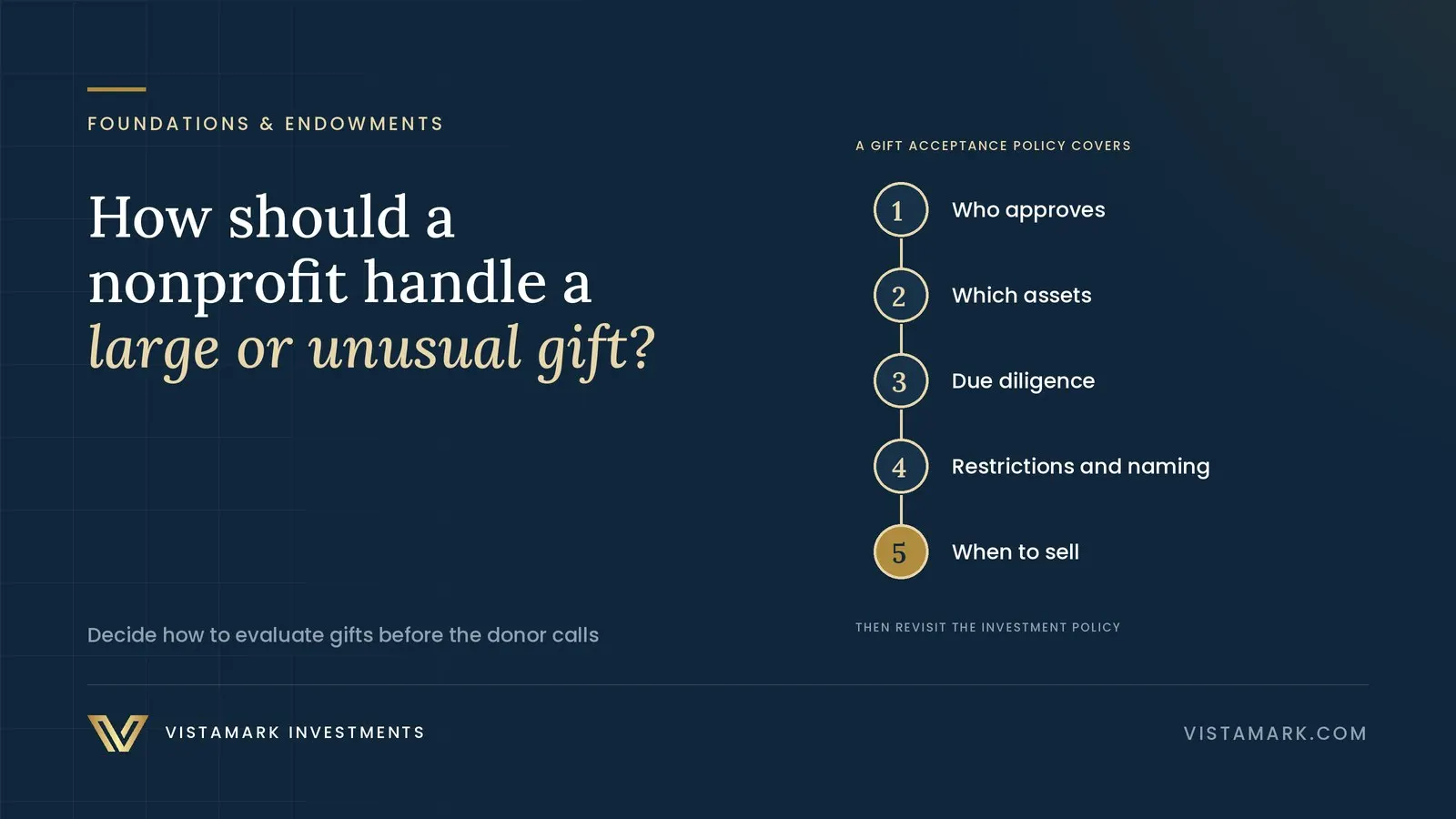
A gift acceptance policy is a board-approved document that sets out which gifts the organization will accept, under what conditions, and who has authority to approve them. It lets staff say yes quickly to straightforward gifts, gives a clear process for complex ones, and gives the organization a principled way to decline gifts that would cost more than they are worth.
What should the policy cover?
- Approval authority: which gifts staff can accept and which require a committee or board decision, often based on size, asset type or restrictions.
- Acceptable assets: cash, publicly traded securities, real estate, closely held stock, partnership interests, life insurance, tangible property, cryptocurrency and retirement plan assets, with conditions for each.
- Due diligence: environmental reviews for real estate, legal review for business interests, appraisal requirements and a review of any liabilities that come with the gift.
- Sale policy: a default of selling non-cash gifts promptly unless the board decides otherwise, so the endowment stays within its investment policy.
- Restrictions and naming: how restricted gifts are documented, what happens if a restriction becomes impractical, and naming rights.
- Donor relations: encouraging donors to seek independent advice and avoiding conflicts of interest.
How should restricted gifts be handled?
Carefully, in writing. A gift agreement should state the purpose, whether the gift is endowed or can be spent, how income may be used and what happens if the purpose becomes impossible or impractical. Broad language, such as allowing the board to redirect funds to a closely related purpose, prevents costly court proceedings later. Under UPMIFA, modifying a donor restriction generally requires the donor's consent or a court order, though some states allow a simplified process for small, old funds. Our article on donor-restricted and board-designated funds explains the accounting and legal differences.
What about gifts of real estate or closely held stock?
These are the gifts most likely to carry hidden costs. Real estate can bring environmental liability, carrying costs, property taxes and a slow sale. Closely held stock may be impossible to sell or may come with transfer restrictions. Organizations often accept such gifts only after a review, and sometimes through a supporting organization or donor-advised fund sponsor that specializes in complex assets.
How should a large gift affect the investment plan?
A gift that materially increases the endowment is a reason to revisit the investment policy. A larger endowment may support a different allocation, more private investments or a different spending rate; a large restricted gift may need its own investment approach. Pledges paid over several years affect liquidity planning. Adding a large gift to the existing portfolio without review can leave the allocation out of balance or the spending policy out of date.
What are common mistakes?
- Accepting a gift before reviewing it because declining feels awkward.
- Agreeing to restrictions so narrow that the gift becomes hard to use.
- Holding gifted stock for years because of the donor relationship, creating an unplanned concentration.
- Failing to file required IRS forms when gifted property is sold within three years.
Where should an organization start?
If you do not have a gift acceptance policy, adopt one before your next campaign. If you do, review it alongside your investment policy so the two work together. Our article on planned giving and endowments covers how to cultivate the gifts in the first place. Vistamark's foundation and endowment practice helps committees integrate large gifts into their investment and spending plans.
This article is part of our Foundation & Endowment Investment Guide, which collects our writing on the topic with answers to common questions.
Market Compass · weekly
Get the Compass by email
One concise recap of the week’s market-moving events and what to watch next, written by our CIO at the end of each market week.

Partner and Director of Institutional Advisory with more than 20 years advising endowments, foundations, healthcare organizations and retirement plan sponsors. More about Ryan →
This article is for informational and educational purposes only and does not constitute investment, legal, tax or accounting advice, or an offer or solicitation to buy or sell any security. Views are those of the author as of the publication date and are subject to change. Vistamark Investments is an SEC-registered investment adviser; see our disclosures.