
Topic
Foundations & Endowments
Spending policy, UPMIFA, governance, advisor selection and fees for foundation, endowment and nonprofit investment committees.
 Foundations & Endowments
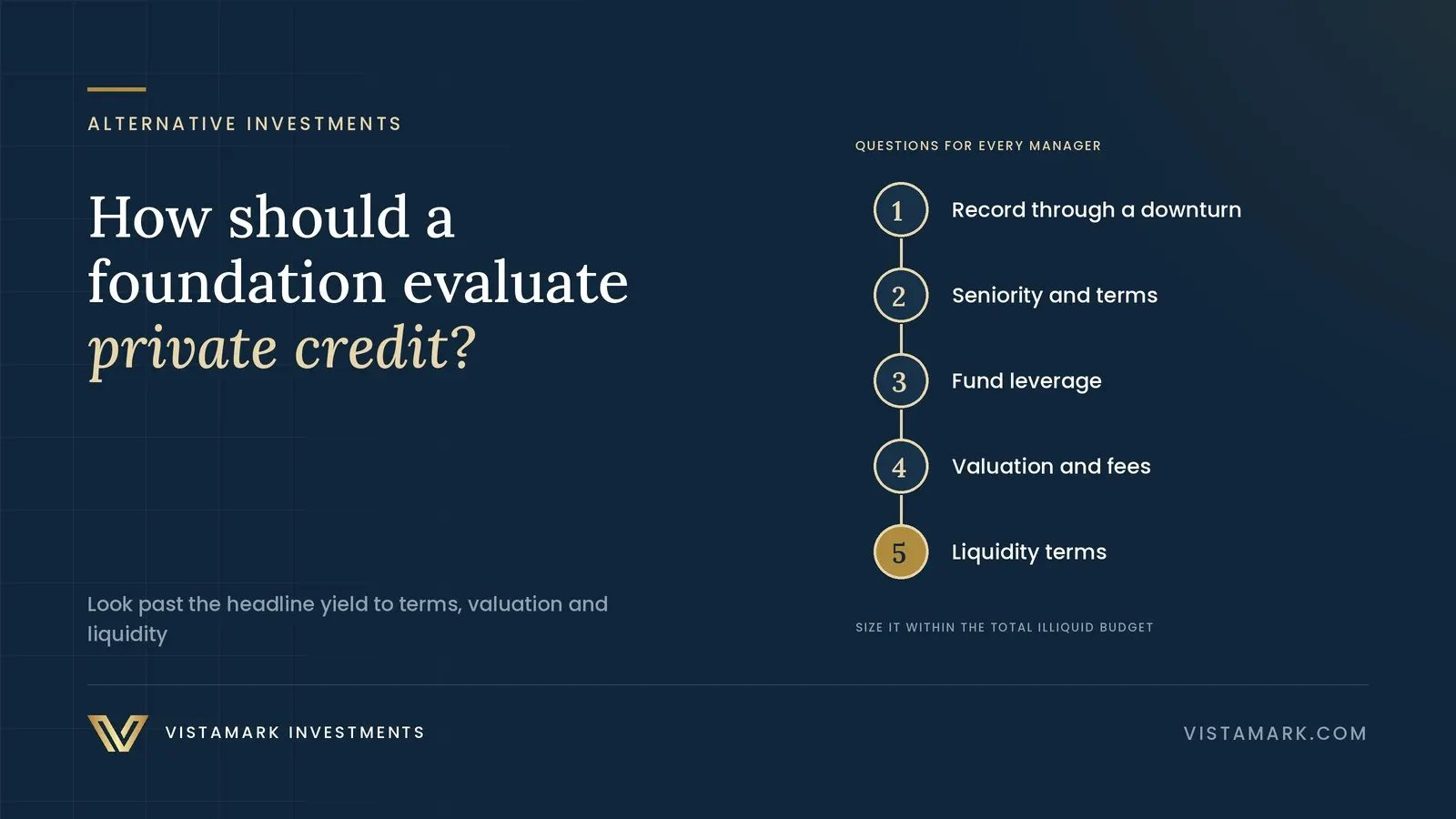
How Should a Foundation Evaluate Private Credit?
How foundations should evaluate private credit managers: underwriting record, seniority, loan terms, leverage, fees…
 Private Wealth & Family Office
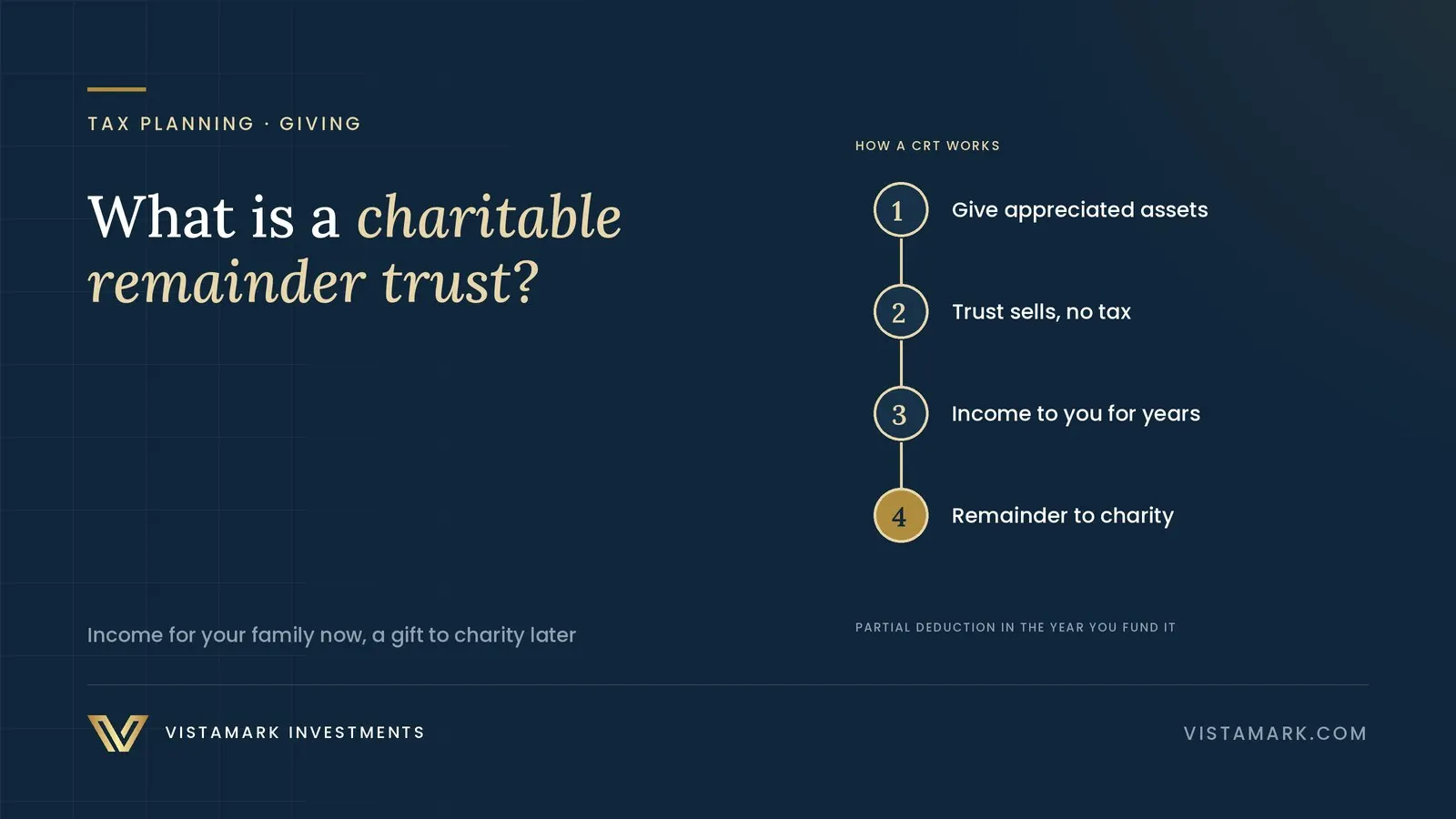
What Is a Charitable Remainder Trust?
Charitable remainder trusts explained: CRAT vs. CRUT, tax-free sale of appreciated assets, income for life, the…
 Foundations & Endowments
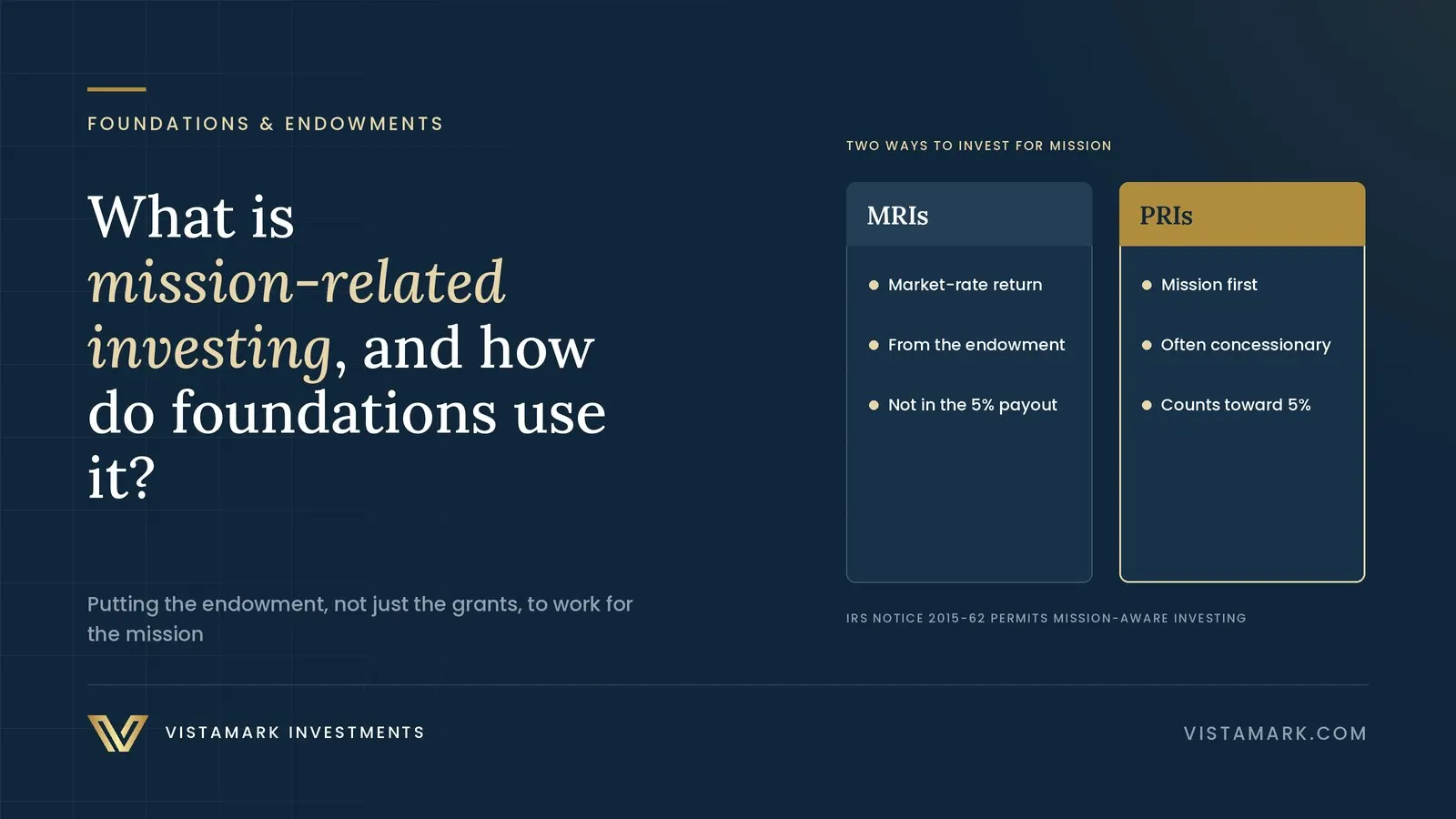
What Is Mission-Related Investing, and How Do Foundations Use It?
Mission-related vs. program-related investments for foundations: the 5% payout, IRS Notice 2015-62, jeopardizing…
 Foundations & Endowments
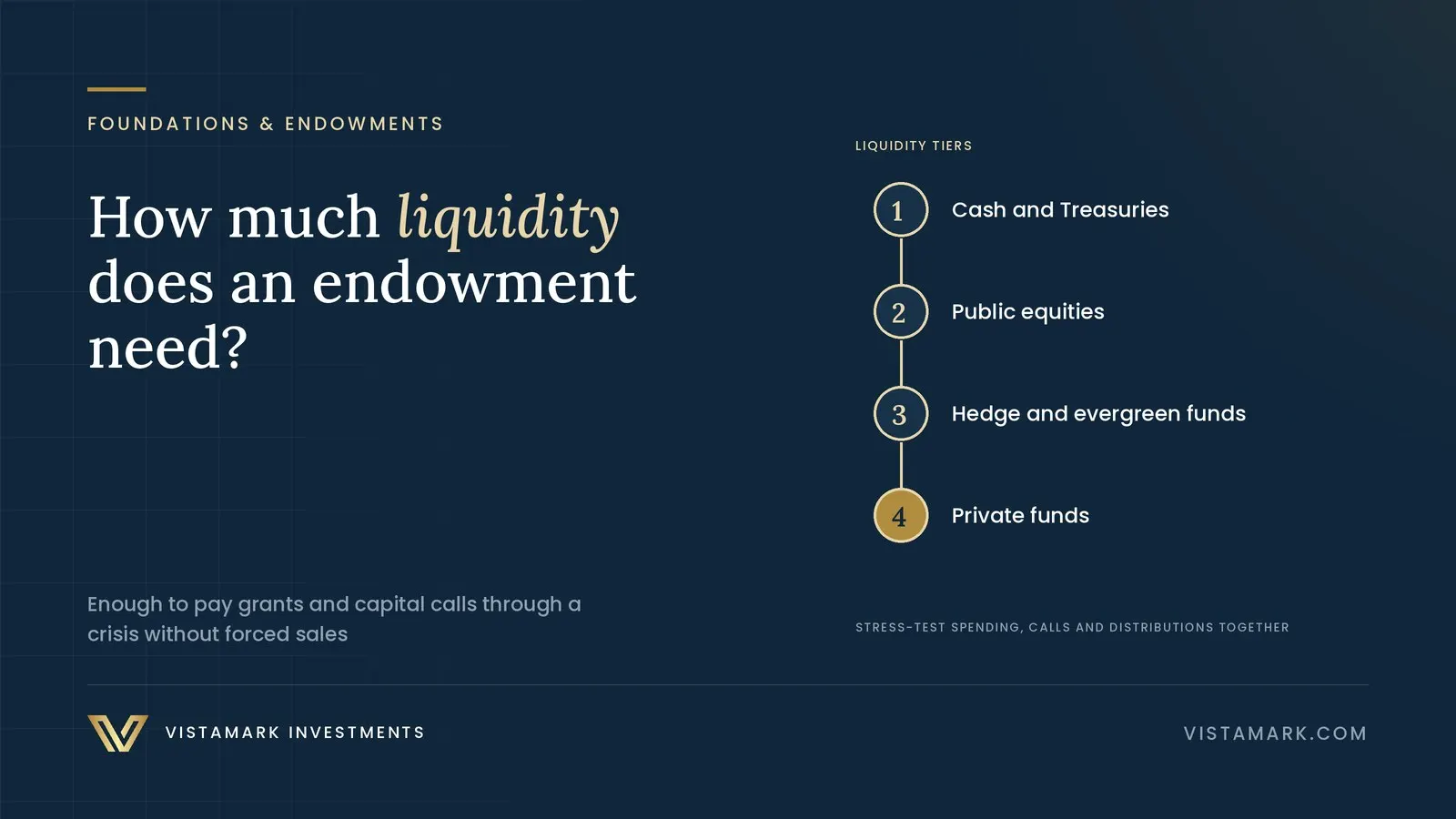
How Much Liquidity Does an Endowment Need?
How much liquidity an endowment needs: stress-testing spending, capital calls and distributions, liquidity tiers and…
 Foundations & Endowments
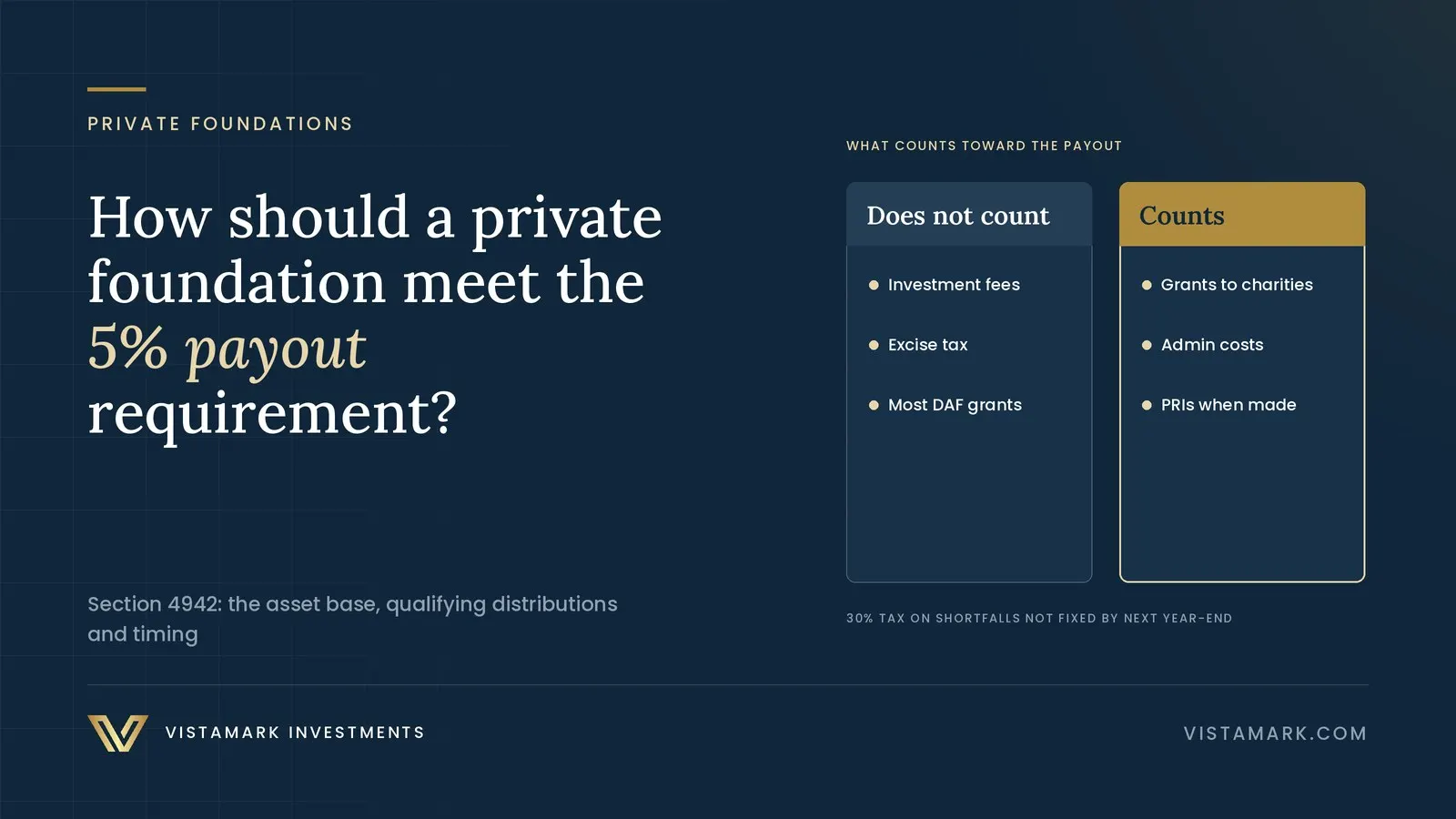
How Should a Private Foundation Meet the 5% Payout Requirement?
The private foundation 5% payout rule explained: how the asset base is calculated, what counts as a qualifying…
 Choosing an Investment Advisor
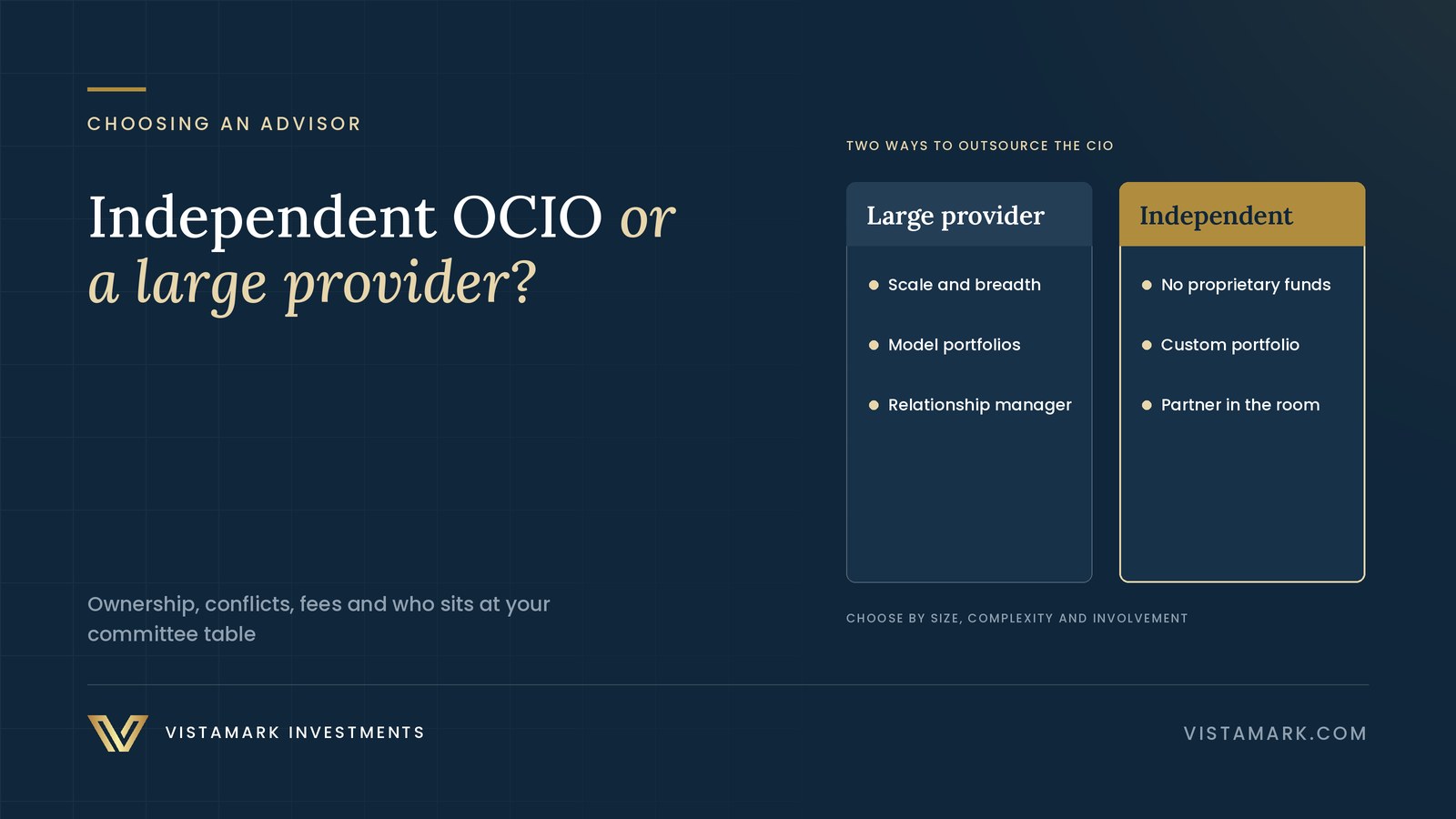
Independent vs. Large OCIO Providers
Independent vs. large OCIO providers: how they differ on ownership, conflicts, fees and who attends your meetings, and…
- OCIO vs. Investment Consultant vs. In-House CIO
- How Should a Foundation Investment Committee Choose Its Policy Benchmark?
- What Should a New Investment Committee Chair Do in the First 90 Days?
- When Should an Investment Committee Fire an Underperforming Manager?
- Build vs Buy: The Real Cost of an Internal Investment Department
- The Fiduciary Governance Calendar
- UPMIFA in Plain English
- How OCIO Pricing Actually Works: Retainers, Basis Points, and Project Fees
- How Much Should an Endowment or Foundation Pay an Investment Advisor or OCIO
- Getting Spending Policy Right: A Practical Guide for Foundation Investment Committees
- Unlocking the Private Market: A Deep Dive into Private Equity and Venture Capital
- Baptist Faith-Based Investing for Endowments and Foundations: A Comprehensive Guide
- Jewish Faith-Based Investing for Endowments and Foundations: A Comprehensive Guide
- Methodist Faith-Based Investing for Endowments and Foundations: A Comprehensive Guide
- Catholic Faith-Based Investing for Endowments and Foundations: A Comprehensive Guide
- Quaker Faith-Based Investing for Endowments and Foundations: A Comprehensive Guide
- Charitable Giving After Recent Tax Law Changes: What Nonprofits and Donors Need to Know
- Beyond the Endowment: How Investment Governance Protects Nonprofit Missions
- Securing Tomorrow, Today: The Indispensable Role of Private Equity in Endowment & Foundation Portfolios
- Choosing the Right Investment Advisor for Your Foundation or Endowment
- The Enduring Legacy: How Planned Giving is Revolutionizing Nonprofit Endowments
- The Big Beautiful Bill: Why This New Tax Law Is Reshaping Endowment and Foundation Investing
- Hedge Funds Through 2025: Evolution, Growth, and Market Dynamics – A Deep Dive
Common questions
What does an OCIO do for a foundation or endowment?
An outsourced chief investment officer (OCIO) takes delegated responsibility for managing a foundation's or endowment's portfolio within the investment policy the board approves, including asset allocation, manager selection, rebalancing and reporting. An investment consultant, by contrast, advises while the committee keeps the final decisions.
How much must a private foundation spend each year?
A private foundation must generally distribute at least 5% of the average value of its investment assets each year for charitable purposes. Many set a spending policy at or slightly above that level and invest for a long-term return that covers spending, inflation and costs.
What law governs how Illinois endowments are invested?
Illinois has adopted the Uniform Prudent Management of Institutional Funds Act (UPMIFA), which requires charities to invest endowment funds prudently and diversify, consider costs and the charity's purposes, and set spending with the fund's long-term preservation in mind.
How does Vistamark work with foundations and endowments?
Vistamark is an independent, employee- and partner-owned investment firm headquartered in Hinsdale, Illinois, in the Chicago area. Its foundations and endowments practice serves as outsourced CIO and investment consultant to foundations, endowments and nonprofits, within each board's investment policy.