Trillions of dollars will pass from one generation to the next over the coming decades, and the research on what happens next is sobering: wealth often fails to survive the transfer, and the most common reasons are not poor investments but poor preparation and poor communication. The heirs who do best are usually the ones who were brought into the family's financial life gradually, long before they inherited anything.
Why do so many heirs struggle with inherited wealth?
Three patterns come up again and again. Some heirs were told nothing and inherit wealth they do not understand, along with trusts, entities and advisors they have never met. Some were given too much too soon, without context or responsibility, and lost motivation. And some families never agreed on values or decision-making, so the transfer becomes a contest between siblings. Each of these is preventable, and none requires sharing every number on day one.
At what age should children learn about the family's wealth?
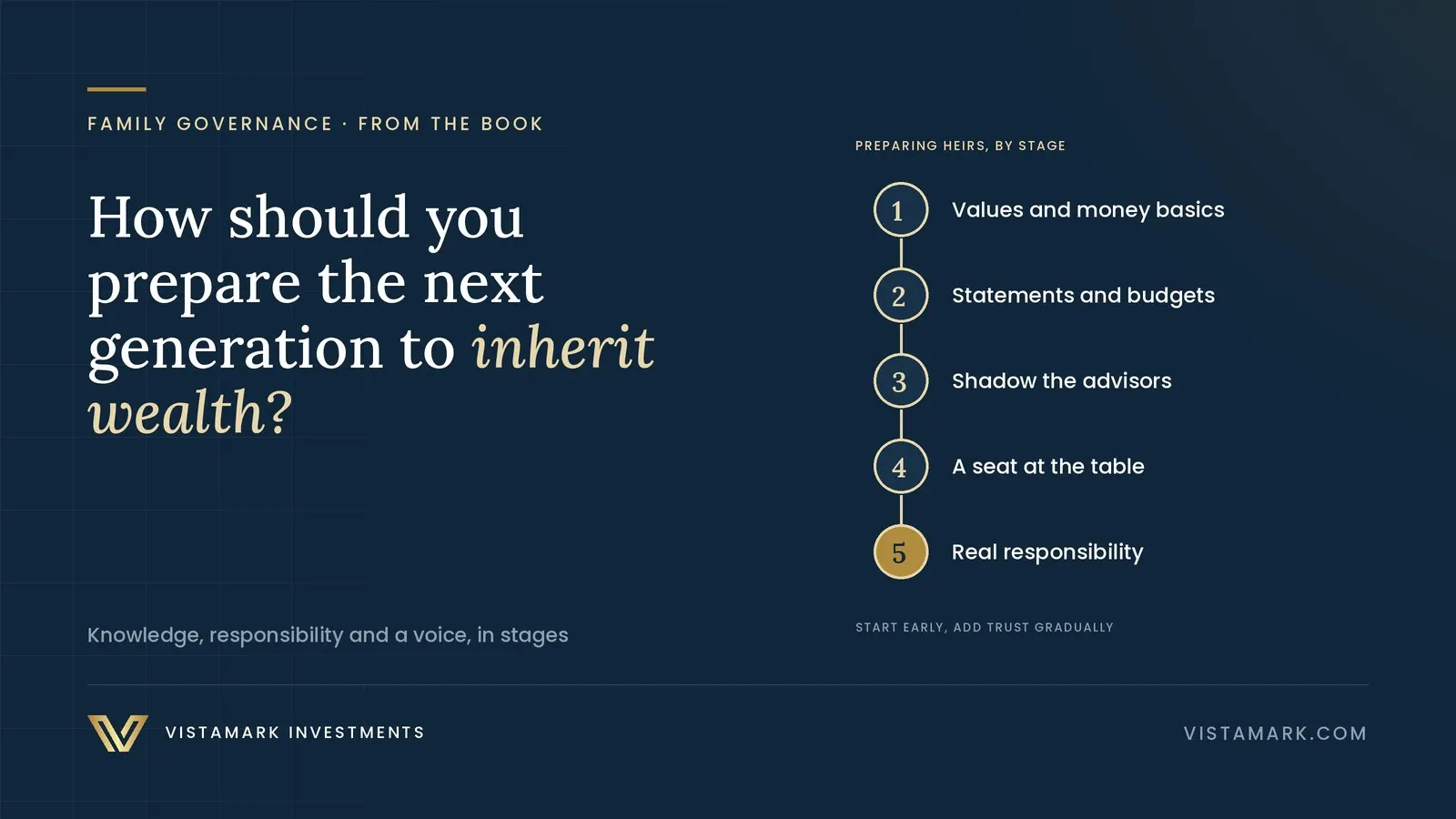
Earlier than most parents expect, but in stages. Young children can learn the basics of saving, spending and giving. Teenagers can learn how investing works and what the family's values are. Young adults can learn how the family's wealth is organized, what trusts they may benefit from and what is expected of them. Specific dollar amounts can come later, as maturity and responsibility grow. The goal is that no heir ever learns the essentials for the first time at a funeral.
What should heirs learn, and in what order?
- Values and purpose. What the wealth is for, how it was created and what the family hopes it will make possible.
- Money basics. Budgeting, saving, credit and taxes, learned with their own money.
- How investing works. Diversification, risk, fees and the difference between speculation and long-term investing.
- How the family's wealth is organized. Trusts, entities, the family business and the role of each advisor.
- How decisions are made. The family's investment and spending policies, and who has authority to decide what.
How do you give heirs real responsibility?
By letting them practice with real, but limited, stakes. Many families give young adults responsibility for a modest account or a share of the family's annual giving, with a mentor or advisor alongside them. Others invite them to observe advisor meetings, then to present a recommendation, then to vote on smaller decisions. A family foundation or donor-advised fund is an especially good training ground, because it teaches research, budgeting and collective decision-making with a purpose everyone can support.
Should trusts protect heirs from themselves?
Trusts can provide protection from creditors, divorce and poor judgment, and staged distributions can match an heir's growing maturity. But a trust is not a substitute for preparation. The most successful structures pair thoughtful trust terms, such as distributions for education, a home or starting a business, with a trustee who knows the beneficiaries and an education plan that makes the heirs capable of eventually taking on more control.
What role should family meetings play?
A central one. Regular family meetings give the senior generation a forum to explain its intentions, and give heirs a place to ask questions, build relationships with advisors and learn to make decisions together. Families that meet regularly are far less likely to see the transfer of wealth turn into a dispute.
How do you avoid demotivating the next generation?
Tie the wealth to a purpose and to the heirs' own contribution. Encourage careers and pursuits that are meaningful in their own right, be clear about what the family will and will not fund, and celebrate effort and responsibility rather than consumption. Many families write these expectations into a family mission statement or constitution so they outlast any one conversation.
Where should a family start?
Pick one step this year: a family meeting focused on values, an introduction between your adult children and your advisors, or a small giving budget for each heir to direct. Small, regular steps build the knowledge and trust that make the eventual transfer a continuation rather than a shock. The VistaWealth Office works with families on next-generation education alongside their investment and estate plans.
This article is part of our Family Governance Guide, which collects our writing on the topic with answers to common questions.

Managing Partner, VistaWealth Office™ — integrated wealth planning for executives, business owners, family offices and charities. More about William →
This article is for informational and educational purposes only and does not constitute investment, legal, tax or accounting advice, or an offer or solicitation to buy or sell any security. Views are those of the author as of the publication date and are subject to change. Vistamark Investments is an SEC-registered investment adviser; see our disclosures.