Endowments and foundations are entrusted with a monumental responsibility: to steward capital in a way that not only preserves but robustly grows purchasing power for generations, supporting vital missions in perpetuity. In a landscape marked by market volatility, persistent inflationary pressures, and evolving return expectations, the asset allocation decisions made today are foundational—they will echo for decades. Increasingly, private equity (PE) has emerged as an indispensable cornerstone strategy for institutions seeking to meet these challenges head-on and secure their future. Here’s why investment committees should unequivocally give private equity a prominent place at the table.
Does private equity improve endowment returns?
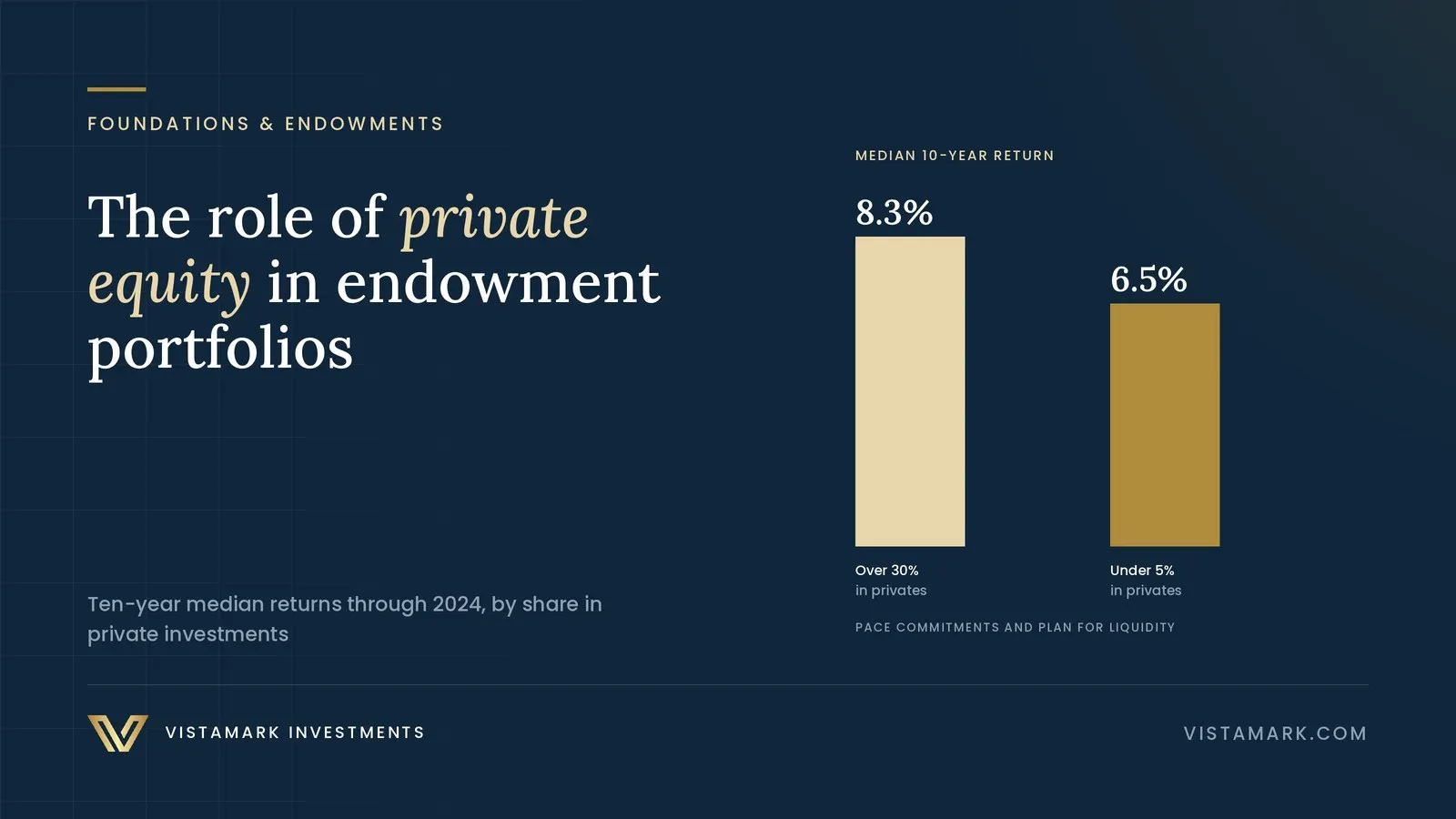
The data paints a clear picture: endowments and foundations with higher allocations to private investments—including private equity and venture capital—have consistently outperformed their peers over the long term. According to Cambridge Associates, institutions dedicating over 30% to private investments achieved a median ten-year return of 8.3% as of December 2024, significantly outpacing the 6.5% for those with less than 5% in private assets. Notably, the top quartile of performers over the last decade boasted an average private investment allocation of 30%, demonstrating that these strategic decisions contributed meaningfully to their superior results.
How does private equity diversify an endowment portfolio?
Private equity offers a unique return profile that perfectly complements traditional public equities and fixed income. While public markets are efficient and often volatile, private markets empower skilled managers to unlock value through hands-on operational improvements, strategic repositioning, and patient, long-term capital deployment. This active ownership model has a strong track record of delivering higher risk-adjusted returns and a lower correlation to public markets, providing invaluable diversification for endowment portfolios and enhancing overall resilience.
Does private equity protect endowments against inflation?
For institutions with perpetual mandates, preserving real (inflation-adjusted) purchasing power isn't just important—it's paramount. Traditional fixed income, while stable, often struggles to outpace spending combined with inflation, especially when education-sector inflation creeps up by 3-4% annually. As a growth-oriented asset class, private equity is far better positioned to deliver the robust returns necessary to fund ongoing commitments and shield against the erosive effects of inflation, safeguarding your mission for the long haul.
4. The Compounding Power of Patience and Top-Tier Managers
Private equity investing is inherently long-term. It demands patience and a disciplined "vintage year" approach to build and maintain target allocations. While the dispersion of returns among private equity managers can be wide, institutions that can access top-quartile managers have been consistently rewarded with outsized gains and, surprisingly, lower portfolio volatility relative to public equities. This underscores the critical importance of rigorous due diligence, expert manager selection, and ongoing program oversight.
5. Real-World Evidence: Large Institutions Are Leading the Way
The trend is undeniable: larger endowments and foundations are increasingly embracing private equity as an indispensable tool. As of the end of 2024, the average allocation to private equity and venture capital across all U.S. endowments and foundations was 19.2%. The largest institutions were even more committed, allocating 25%—nearly double the 13% average for their smaller peers. This shift isn't just a tactical move; it's a clear recognition that private equity is a strategic pillar for long-term portfolio resilience and growth, vital for securing tomorrow.
What should committees consider before investing in private equity?
Private equity isn't without its complexities. Its illiquidity, longer investment horizons, and operational demands require careful planning and strong governance. Foundations must always ensure they have sufficient liquidity to meet annual payout obligations and avoid overconcentration that could jeopardize financial stability. A prudent approach includes:
-
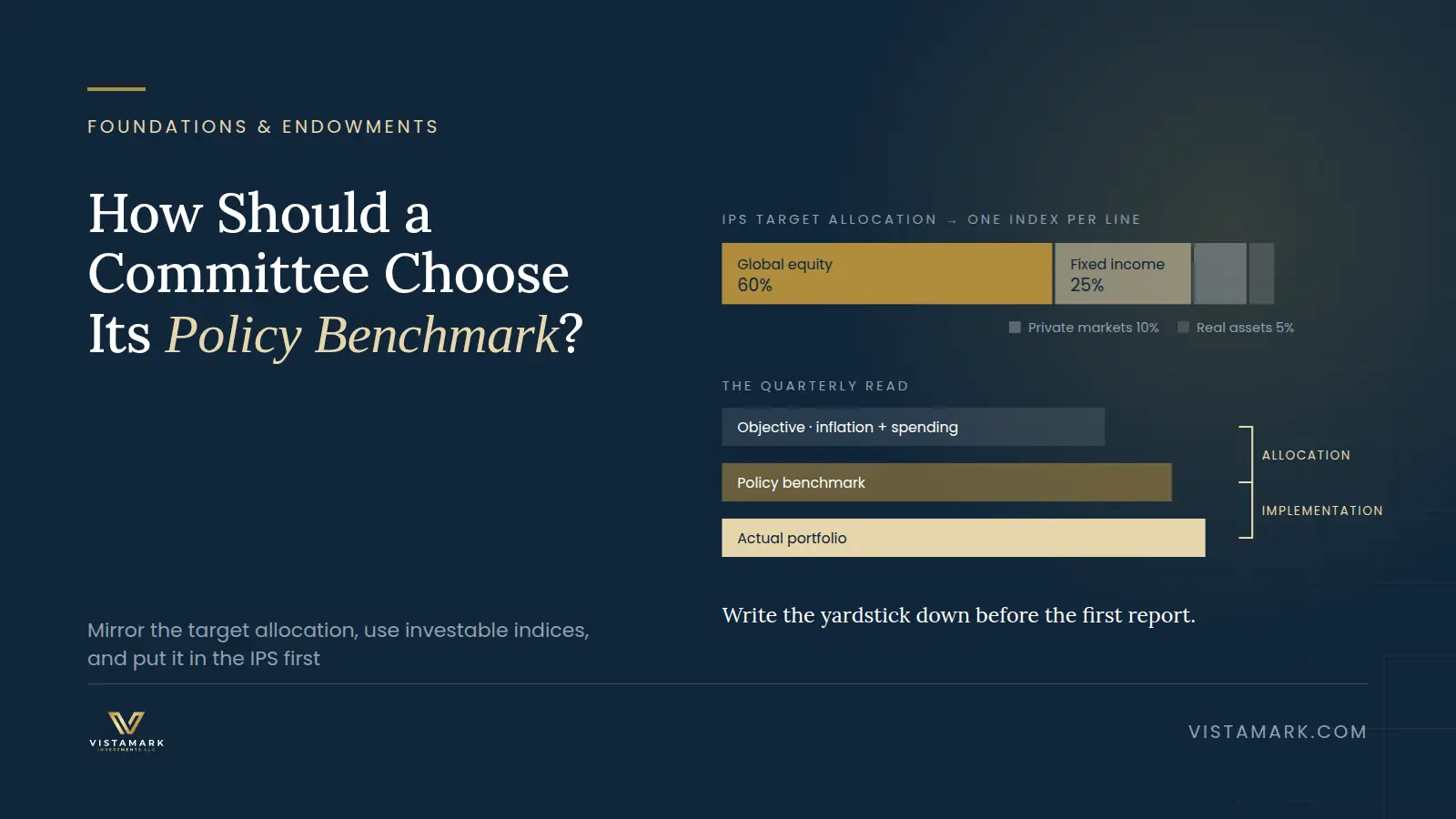
Setting clear allocation targets within a written investment policy.
-
Conducting rigorous due diligence and thorough risk assessments.
-
Maintaining a diversified mix of both liquid and illiquid assets.
-
Leveraging experienced managers and advisors to navigate the inherent complexities.
Conclusion: A Strategic Imperative for Long-Term Success
For endowment and foundation investment committees, private equity is far more than just an alternative asset class. It's a strategic lever for achieving long-term mission sustainability, enhancing returns, and building resilience against market downturns and inflationary pressures. Institutions that embrace private equity with discipline and foresight are better positioned to fulfill their missions—not just for today’s beneficiaries, but for generations to come.
As one expert wisely put it, "For an institution to execute its mission successfully and consistently over the long term, its portfolio managers must avoid mortgaging the future to fund the present—and vice versa.”
Thoughtfully integrated, private equity is a powerful and indispensable tool to ensure that crucial balance, truly securing tomorrow, today.
Is your institution ready to embrace private equity as an indispensable part of its strategy for enduring success?
For more information and personalized guidance, please feel free to reach out to Vistamark Investments. You can contact us at 312-895-3001, visit our website at vistamark.com, or send us an email to info@vistamark.com.
This article is part of our Foundation & Endowment Investment Guide, which collects our writing on the topic with answers to common questions.

Founder and CIO of Vistamark; as CIO of Fiducient Advisors, oversaw investment strategy for more than $260 billion in client assets. More about Matthew →
This article is for informational and educational purposes only and does not constitute investment, legal, tax or accounting advice, or an offer or solicitation to buy or sell any security. Views are those of the author as of the publication date and are subject to change. Vistamark Investments is an SEC-registered investment adviser; see our disclosures.