This guide collects our articles on estate planning for individuals and families. Start with the basics of trusts and the current exemption, then move to the decisions that shape a plan over decades: who serves as trustee, how insurance and asset protection fit, and how the plan keeps working if the person who runs it today cannot.
Key questions
What is the federal estate tax exemption in 2026?
It is $15 million per person, or $30 million for a married couple who use portability, and it is indexed for inflation in future years. The One Big Beautiful Bill Act made the higher exemption permanent, although any future Congress can change it.
Do Illinois residents pay a separate estate tax?
Yes. Illinois taxes estates above $4 million, with no portability between spouses and no inflation adjustment, so many Illinois families who owe no federal tax can still owe state estate tax.
What is the difference between a revocable and an irrevocable trust?
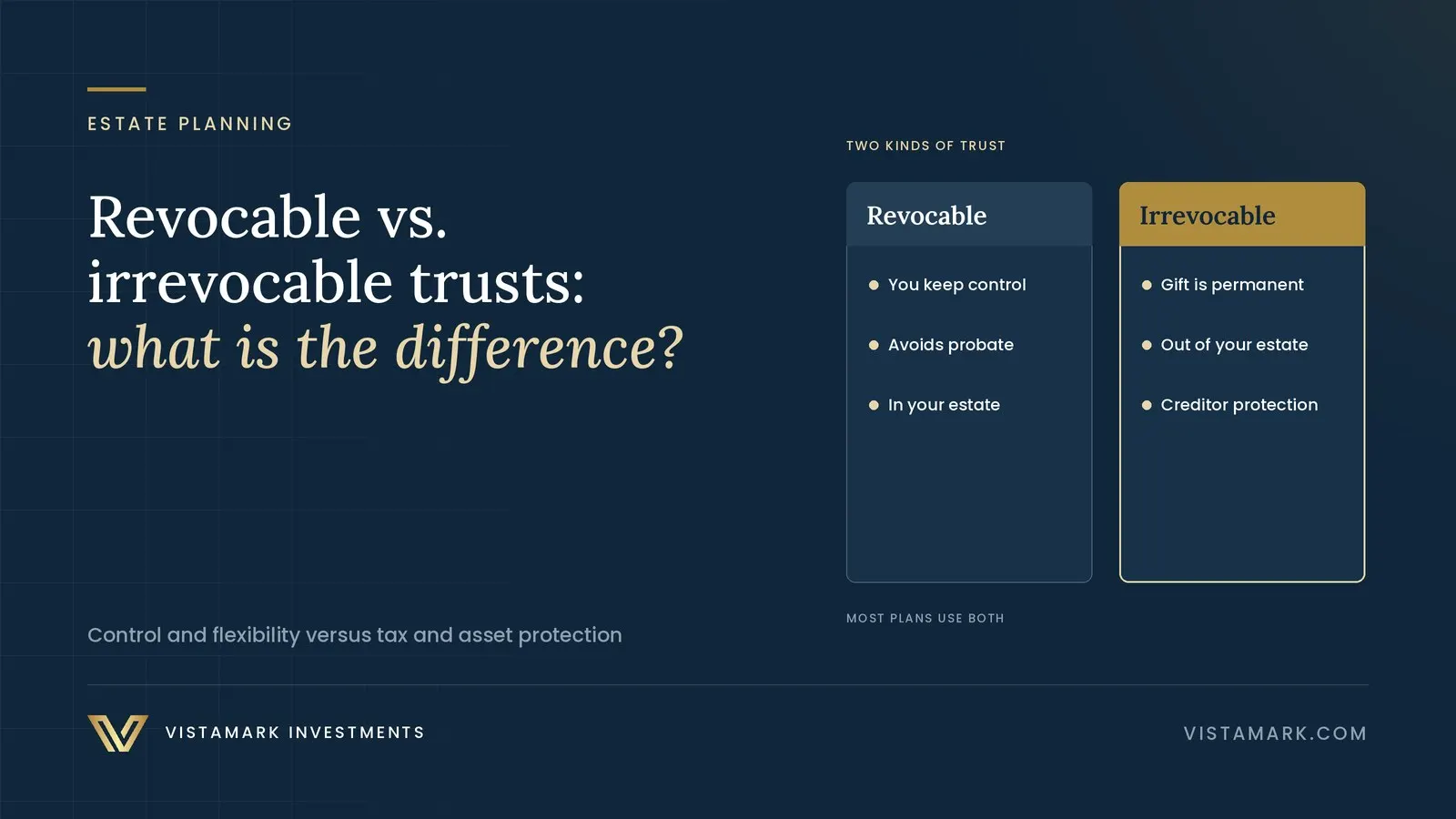
A revocable trust can be changed at any time and mainly avoids probate and plans for incapacity, but its assets stay in your taxable estate. An irrevocable trust generally cannot be changed, and in exchange it can remove assets from your estate and protect them from creditors.
How often should an estate plan be reviewed?
At least every three to five years and after any major event: a birth, death, marriage, divorce, move to a new state, business sale or significant change in tax law.
The foundations
- Revocable vs. Irrevocable Trusts: What Is the Difference?
Revocable vs. irrevocable trusts compared: control, probate, estate taxes, creditor protection and income taxes, and why most families use both. - Safeguarding Your Legacy: Essential Estate Tax Strategies for Married Couples
Estate tax strategies for married couples in 2026: $30M federal shelter, Illinois' $4M tax, portability, SLATs, GRATs, ILITs and disclaimer planning.
People and structures
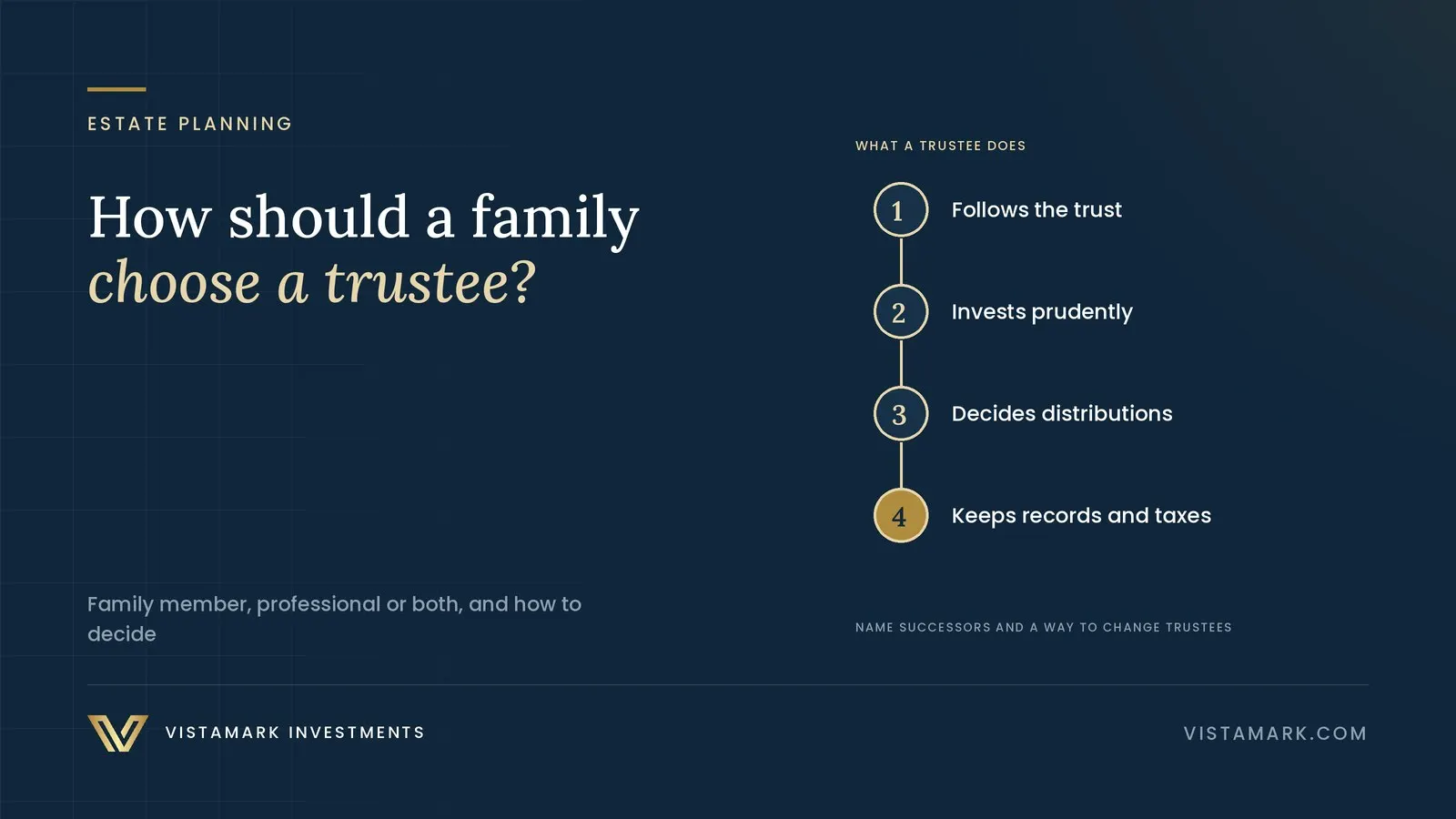
- How Should a Family Choose a Trustee?
How to choose a trustee: family member vs. professional, co-trustees and trust protectors, the qualities that matter and provisions to include.
Life events
- Your Next Chapter: Smart Money Moves for Illinois High-Net-Worth Divorcees
Illinois high-net-worth divorce checklist: secure accounts, update beneficiaries, QDROs and QILDROs, the cost-basis trap, taxes and a tax-aware portfolio. - Selling Your Small Business: A Roadmap to a Successful Exit
How to sell a small business: set goals, get a valuation, organize three years of financials, make yourself expendable and build an advisory team.
Related guides: Tax Planning Guide · Family Governance Guide · Foundation & Endowment Investment Guide