
Topic
Values-Based & Faith-Based Investing
Investment guides for Catholic, Jewish, Methodist, Baptist and Quaker endowments and foundations.
A faith-based endowment or foundation answers to two standards at once. As a charitable fund, it must be invested prudently under UPMIFA, the state law that governs institutional funds in nearly every state. As a religious institution, it is expected to invest in a way that is consistent with the moral teaching of the tradition it serves. The two can be reconciled, but only with a written policy that says what the portfolio excludes, what it seeks out, and how the committee will measure both the financial and the moral result.
Each guide below covers one tradition and follows the same outline: the theological foundations, screening criteria and exclusions, shareholder advocacy, positive screening and impact investing, how to write values into the investment policy statement, governance, and the trade-offs with return.
The guides
- Catholic institutions
- Jewish institutions
- Methodist institutions
- Baptist institutions
- Quaker institutions
For the legal framework every guide assumes, start with UPMIFA in Plain English; for how a committee turns these choices into policy, see our foundations and endowments practice.
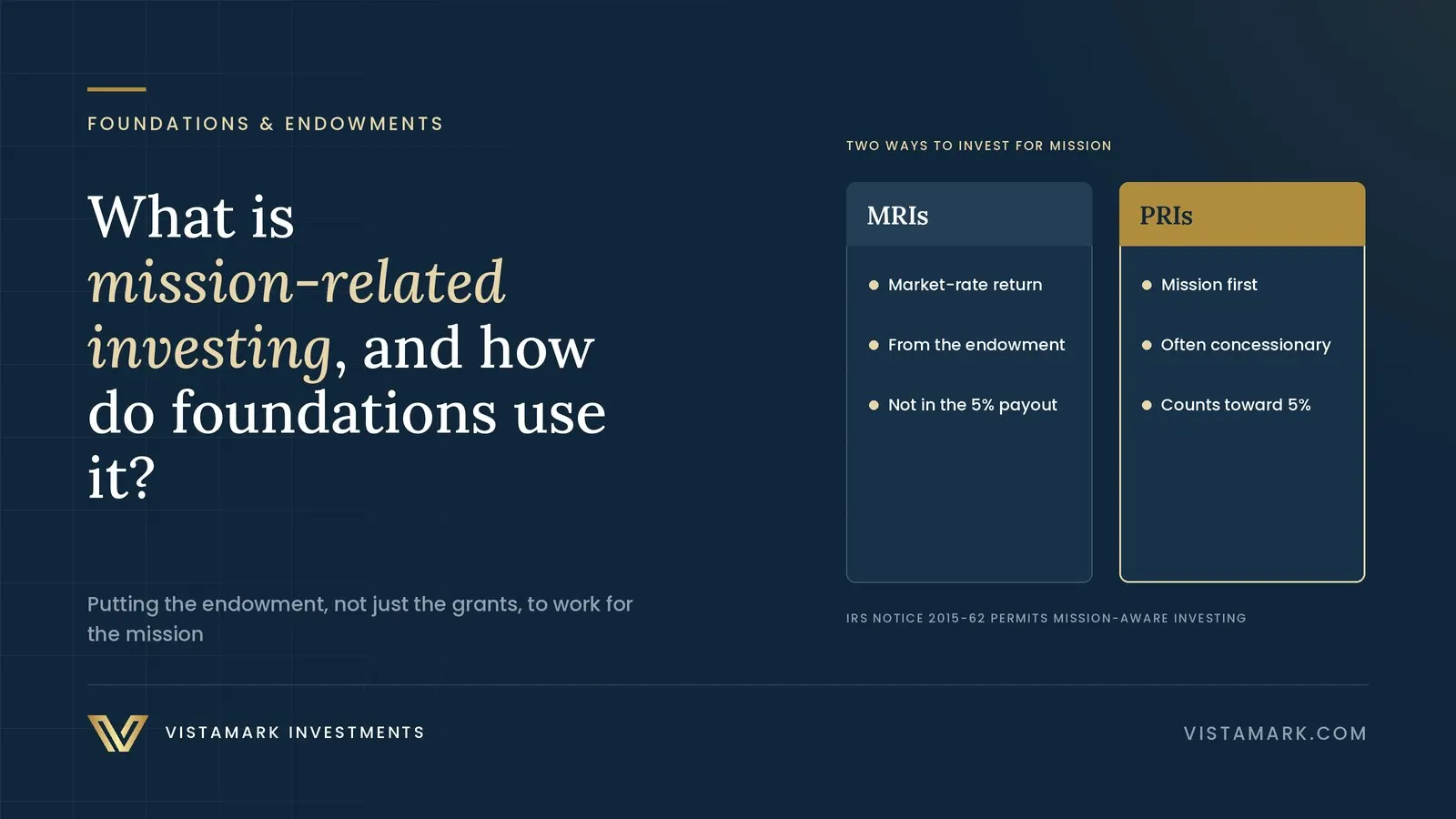 Foundations & Endowments
What Is Mission-Related Investing, and How Do Foundations Use It?
Mission-related vs. program-related investments for foundations: the 5% payout, IRS Notice 2015-62, jeopardizing…
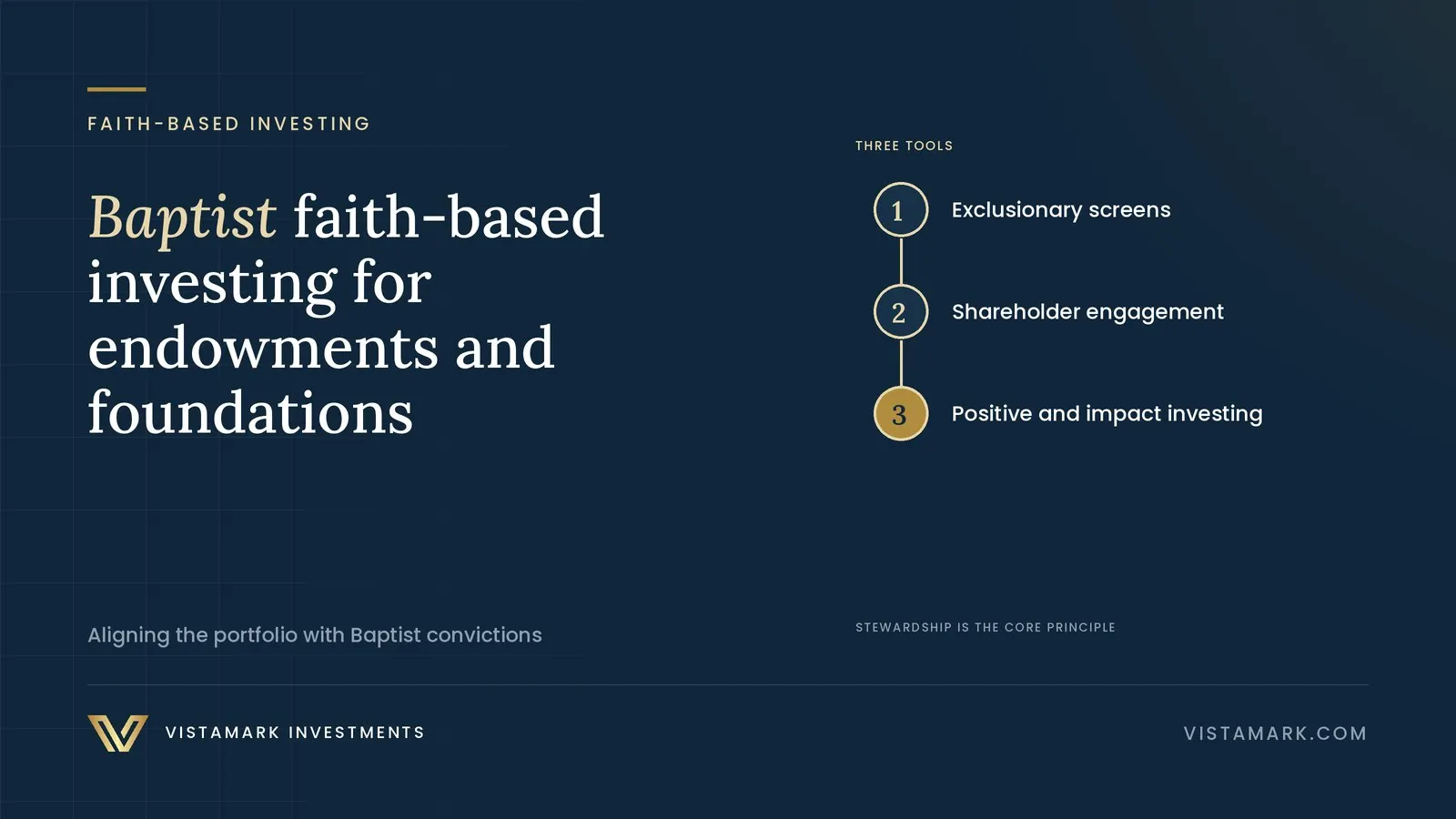 Values-Based & Faith-Based Investing
Baptist Faith-Based Investing for Endowments and Foundations: A Comprehensive Guide
Baptist faith-based investing for endowments and foundations: screening criteria, shareholder engagement, impact…
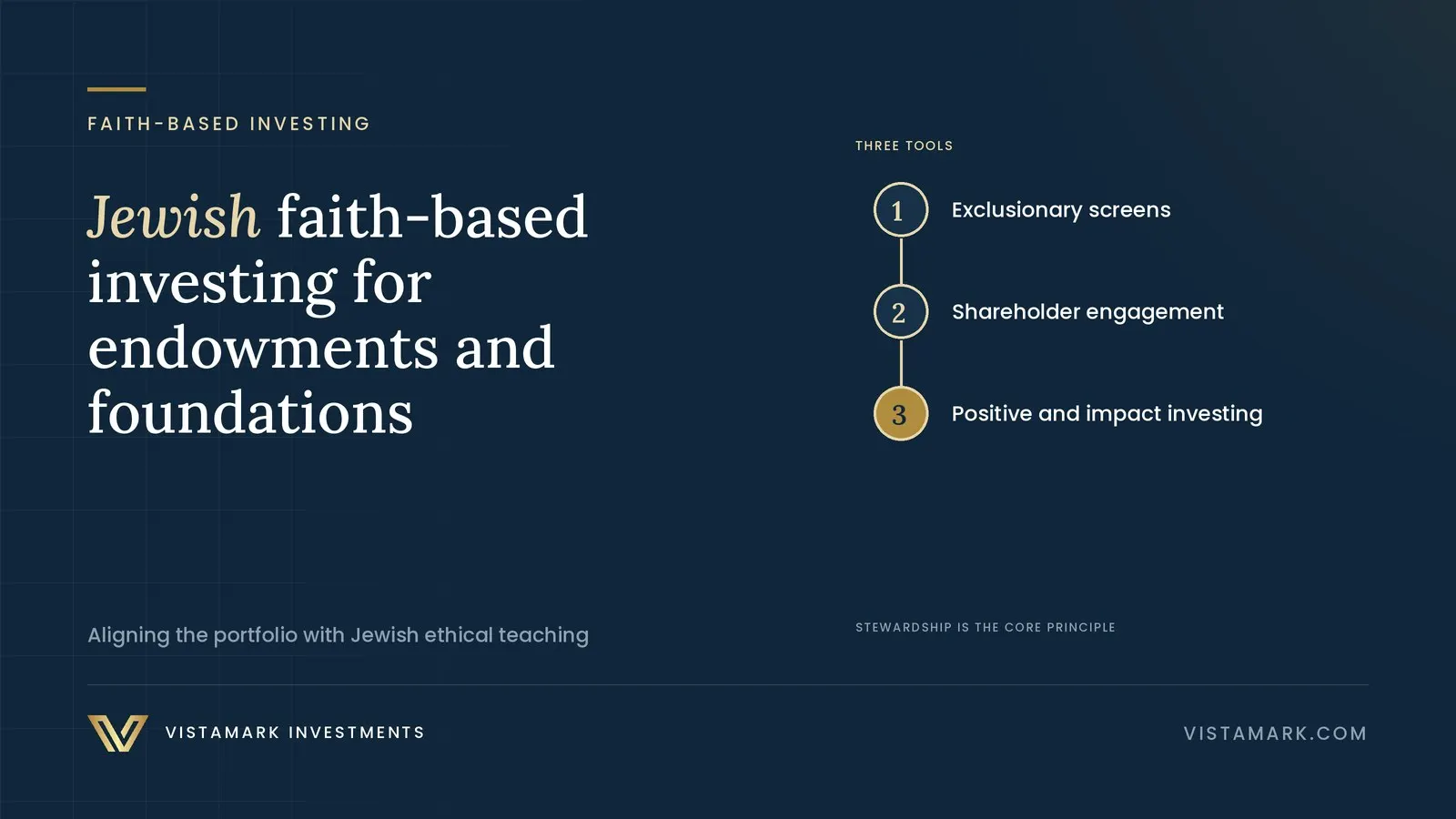 Values-Based & Faith-Based Investing
Jewish Faith-Based Investing for Endowments and Foundations: A Comprehensive Guide
Jewish faith-based investing for endowments and foundations: screening criteria, shareholder engagement, impact…
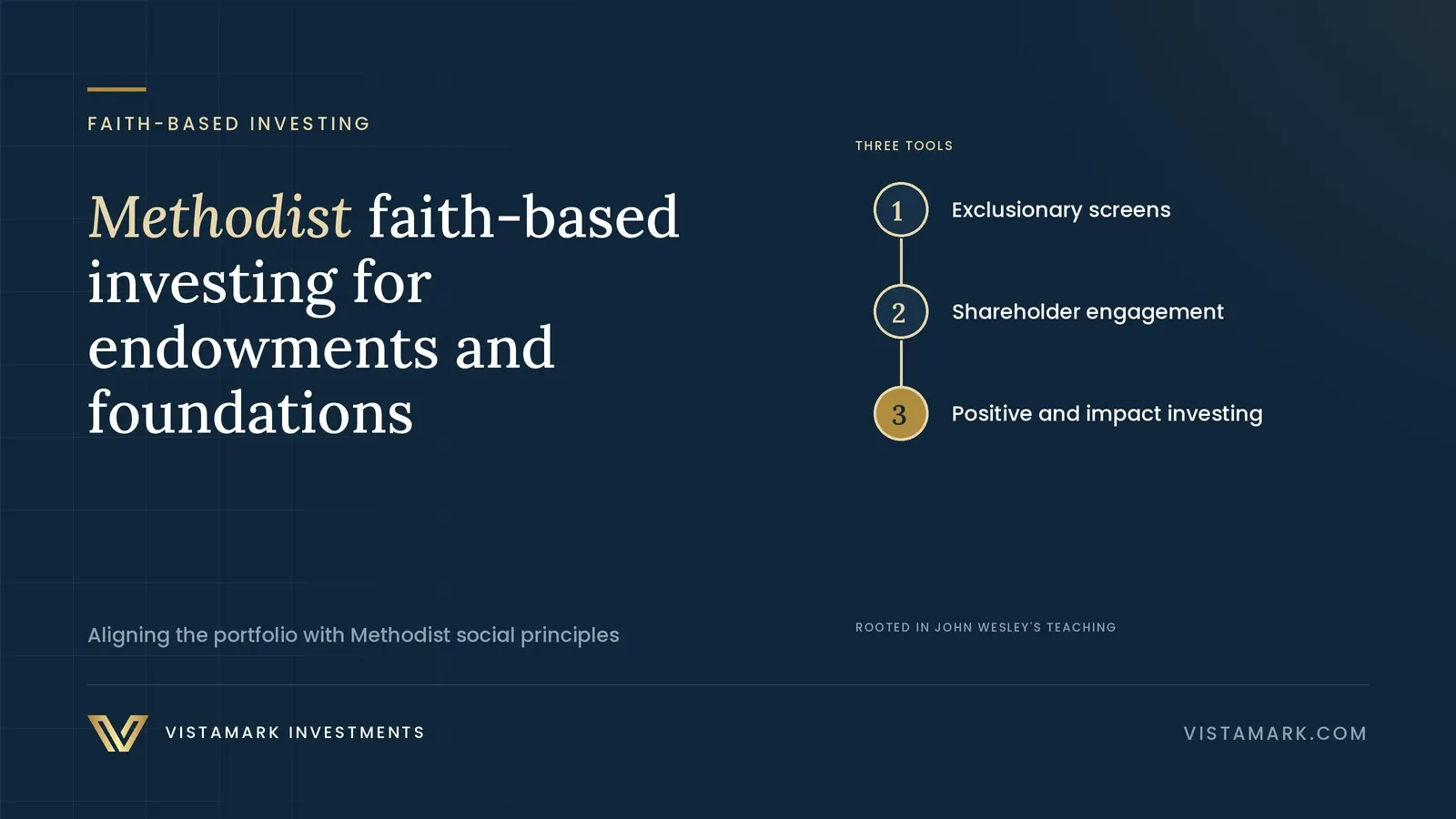 Values-Based & Faith-Based Investing
Methodist Faith-Based Investing for Endowments and Foundations: A Comprehensive Guide
Methodist faith-based investing for endowments and foundations: screening criteria, shareholder engagement, impact…
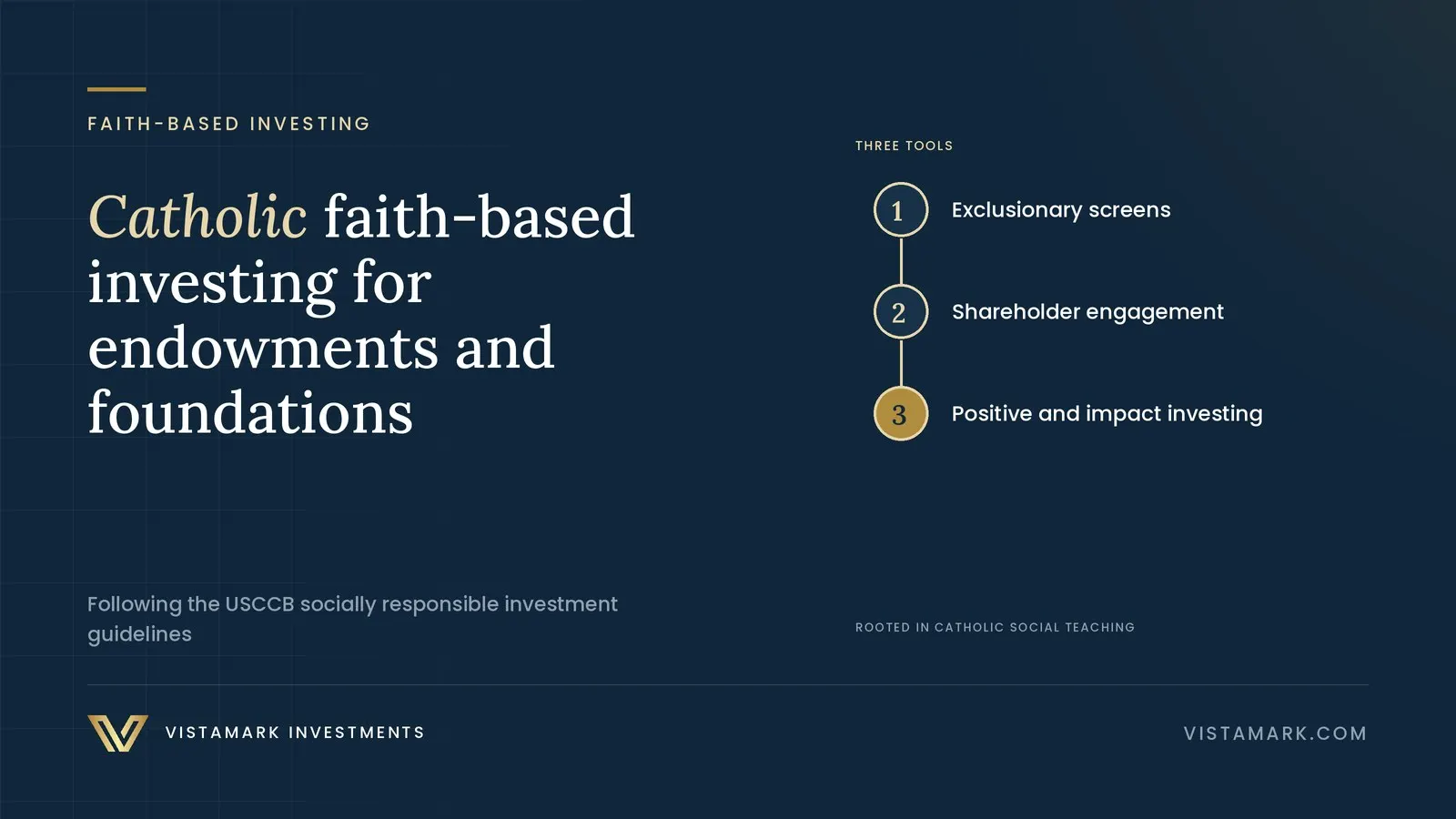 Values-Based & Faith-Based Investing
Catholic Faith-Based Investing for Endowments and Foundations: A Comprehensive Guide
Catholic investing for endowments and foundations under USCCB guidelines: required exclusions, shareholder advocacy…
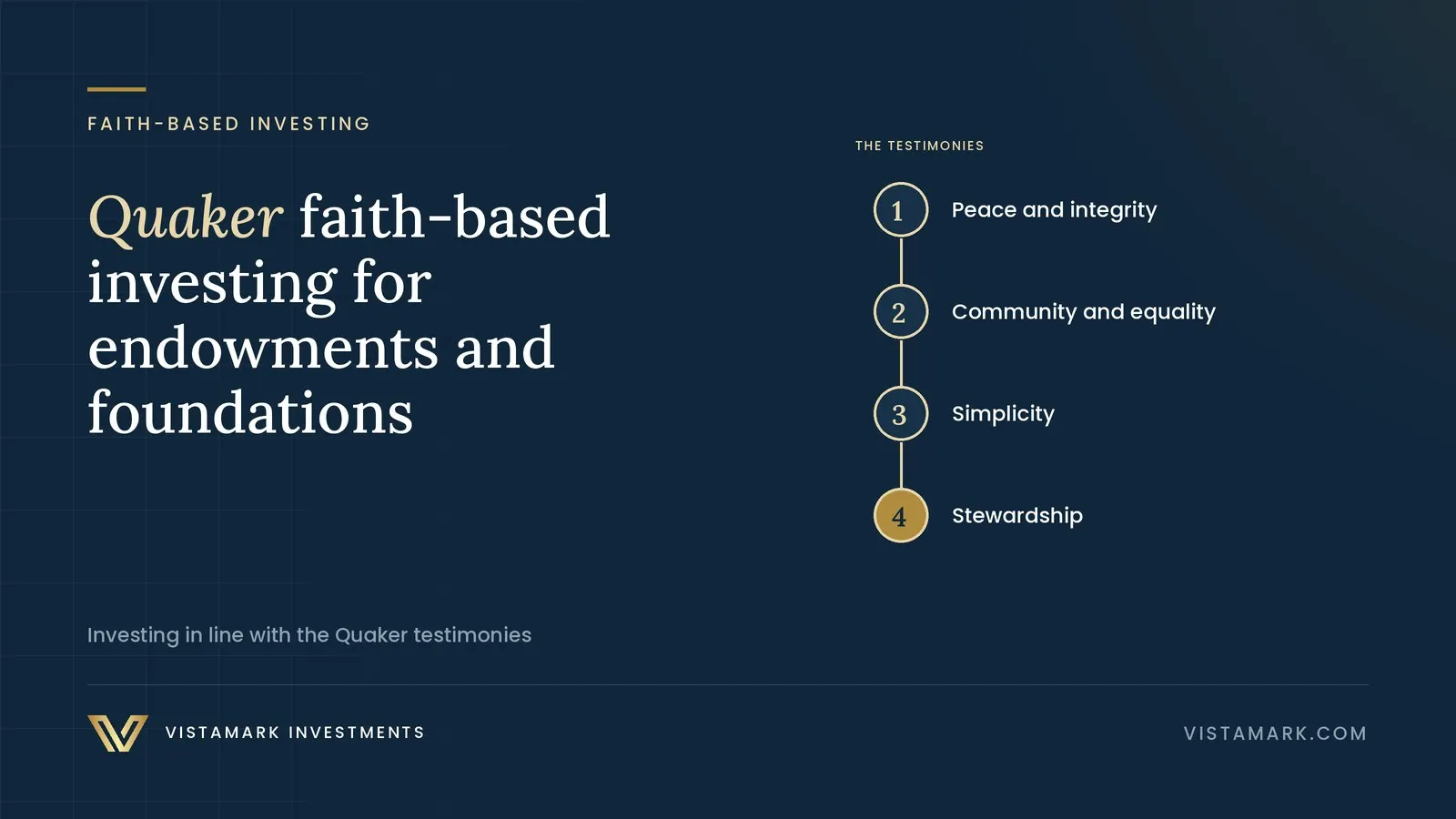 Values-Based & Faith-Based Investing
Quaker Faith-Based Investing for Endowments and Foundations: A Comprehensive Guide
Quaker investing for endowments and foundations: screens rooted in the testimonies, shareholder engagement, impact…
Common questions
What is values-based or faith-based investing?
Values-based investing aligns a portfolio with an investor's beliefs or mission by excluding certain companies, favoring others, engaging with companies as a shareholder or making mission-related investments, while still seeking appropriate returns.
How do foundations align investments with their mission?
Foundations usually start by writing their values into the investment policy statement, then use exclusionary screens, shareholder engagement, mission-related investments and, for concessionary goals, program-related investments that count toward the 5% payout.
Does values-based investing cost return?
It depends on how it is implemented. Broad screens can make results differ from a benchmark in either direction, carefully selected impact funds can target market returns, and concessionary investments accept lower returns by design.