
Topic
Alternative Investments
Private equity, hedge funds, liquid alternatives, real assets and digital assets — what they are and when they belong in a portfolio.
 Foundations & Endowments
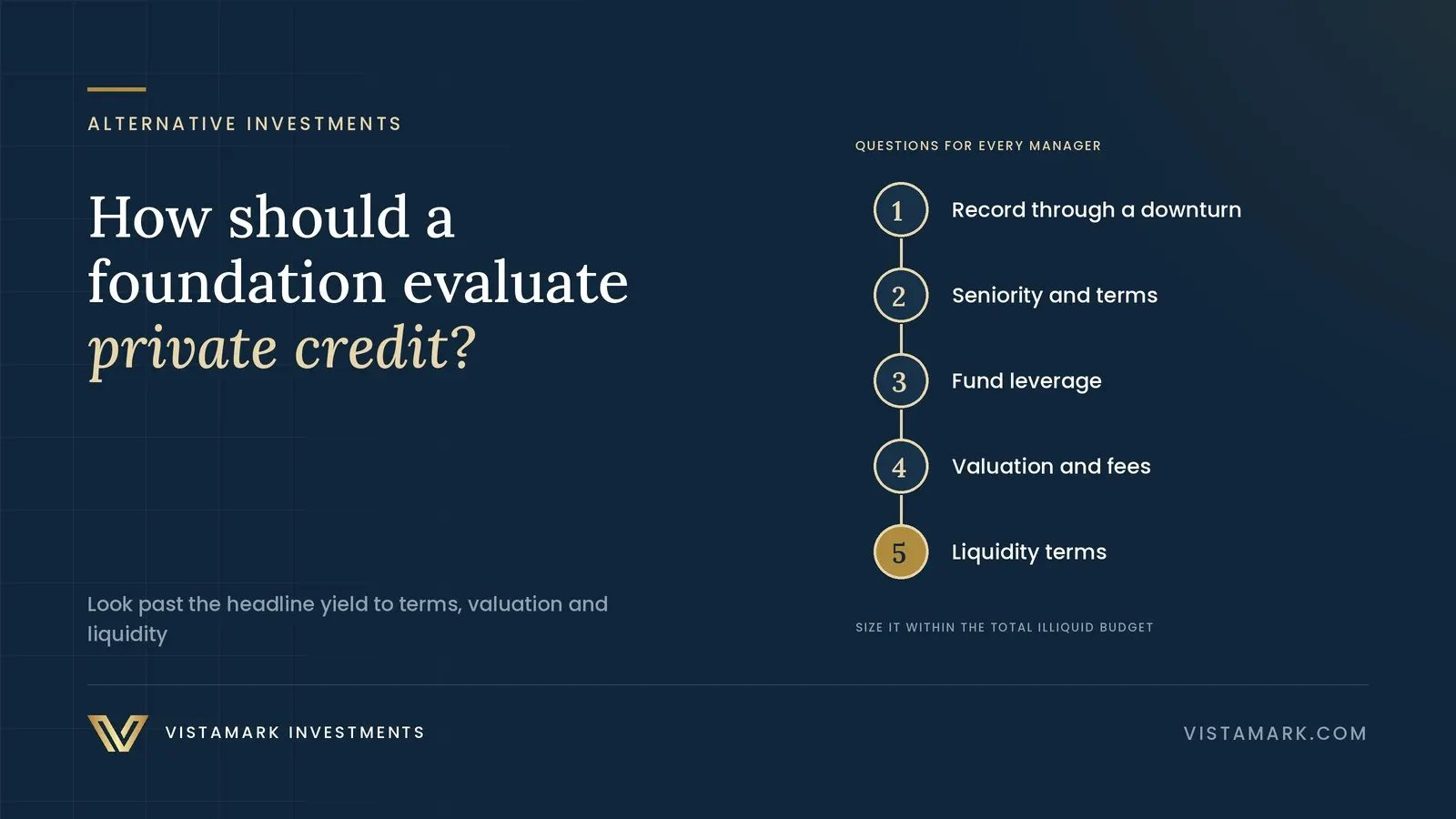
How Should a Foundation Evaluate Private Credit?
How foundations should evaluate private credit managers: underwriting record, seniority, loan terms, leverage, fees…
 Alternative Investments
How Much Private Equity and Private Credit Should a Family Hold?
How wealthy families size private equity and private credit allocations, pace commitments by vintage and keep enough…
 Foundations & Endowments
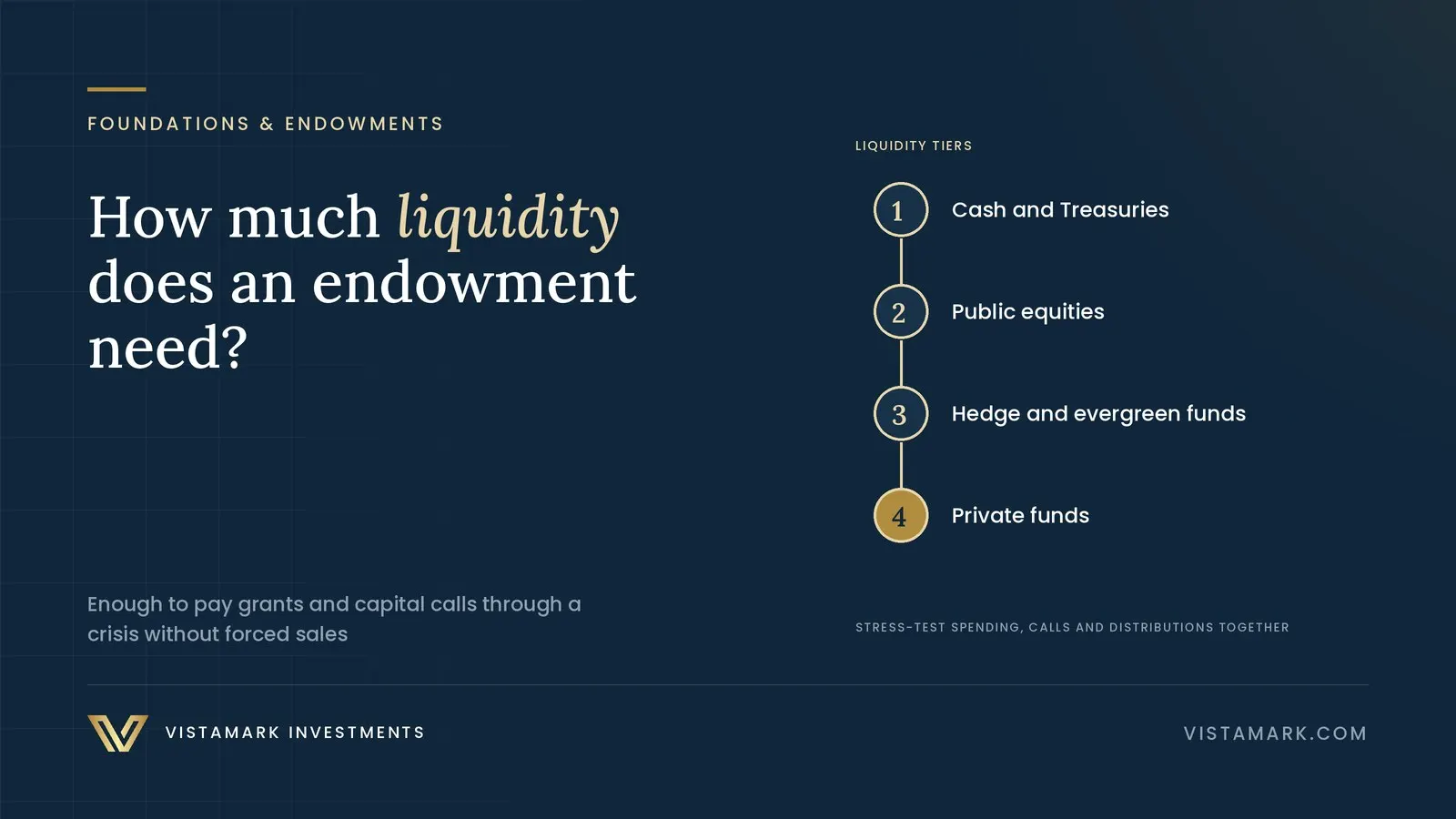
How Much Liquidity Does an Endowment Need?
How much liquidity an endowment needs: stress-testing spending, capital calls and distributions, liquidity tiers and…
 Alternative Investments
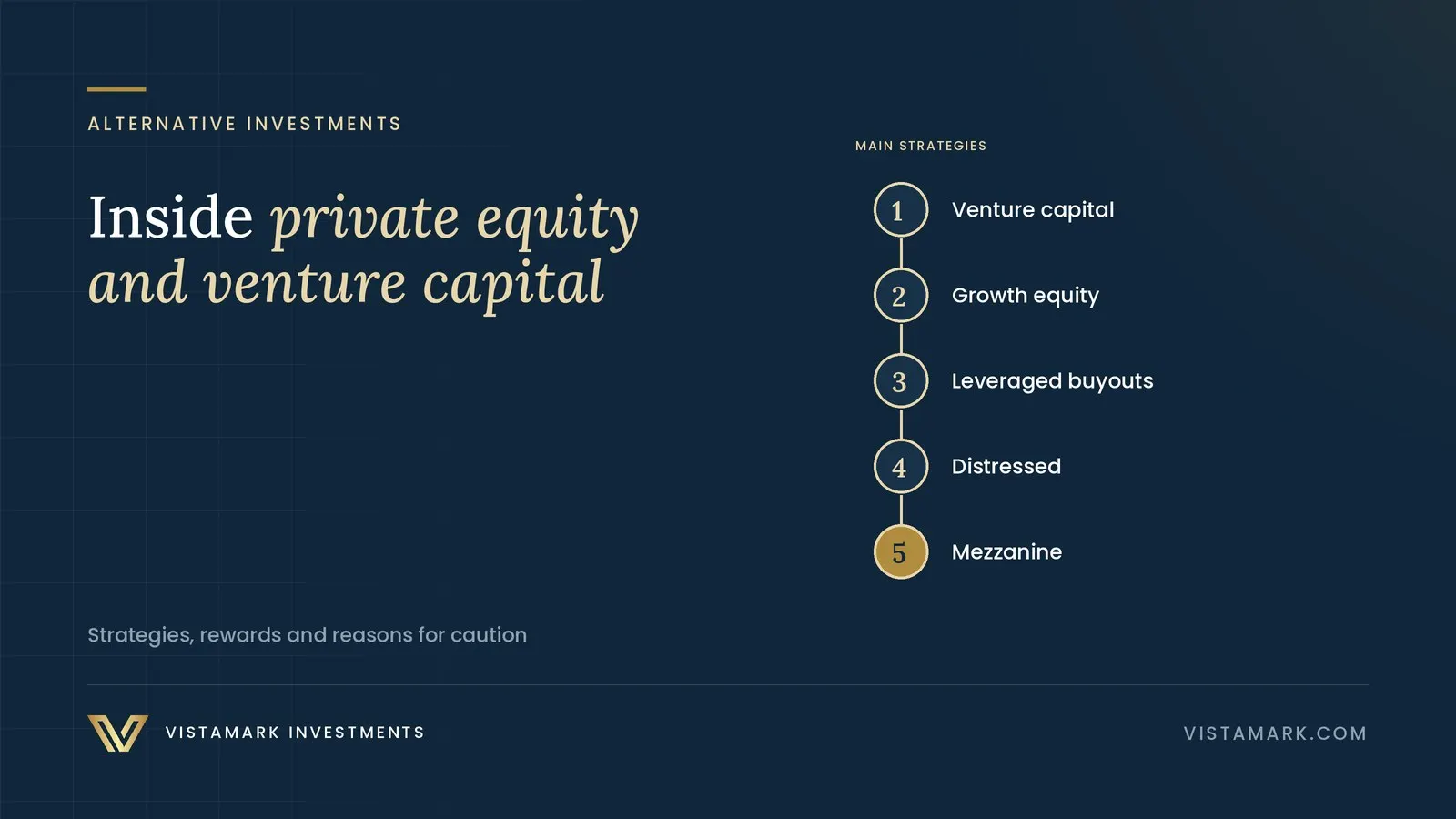
Unlocking the Private Market: A Deep Dive into Private Equity and Venture Capital
Private equity and venture capital explained: buyouts, growth, VC, distressed and mezzanine, plus the return potential…
 Alternative Investments
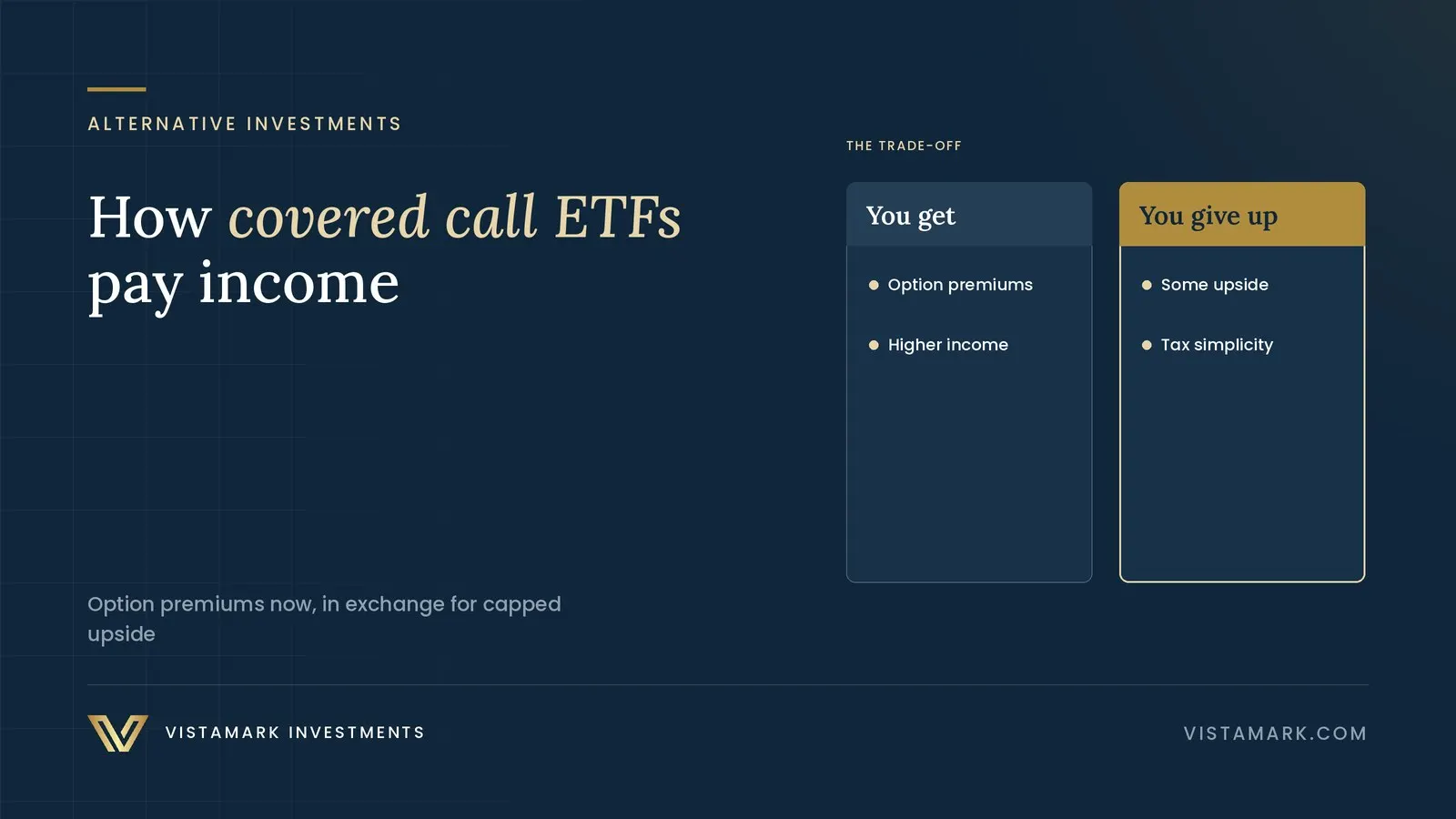
Unleash Your Portfolio’s Income Potential: A Deep Dive into Covered Call ETFs
How covered call ETFs generate income by selling call options, the trade-off of capped upside, ATM vs. OTM strategies…
 Private Wealth & Family Office
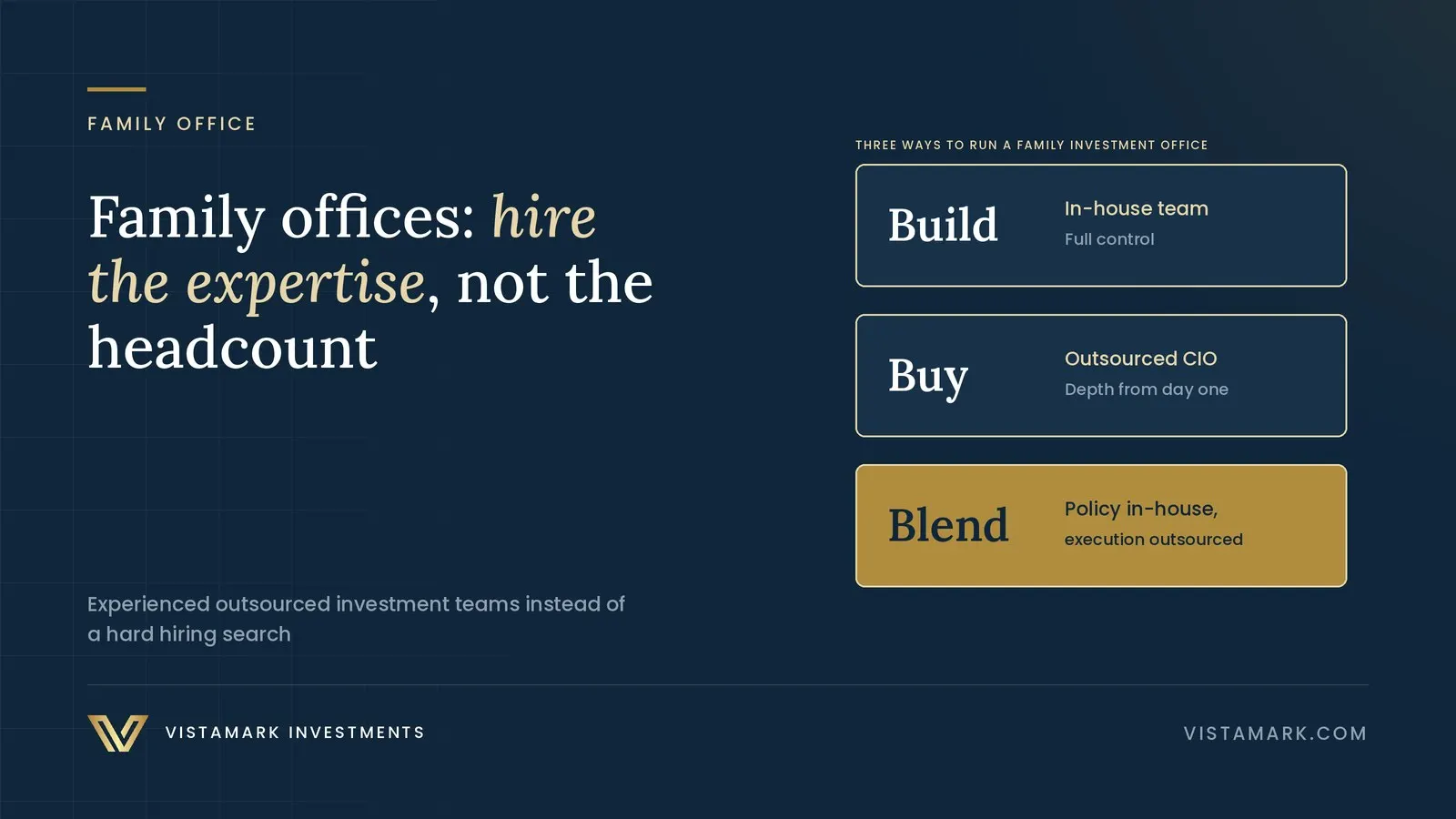
Family Offices: Ditch the Talent Hunt and Hire an Expert Contractor
Why single-family offices struggle to hire investment analysts, and how outsourcing to experienced, conflict-free…
- Active vs. Passive: Tailoring Investment Strategies to Asset Classes
- Liquid Alternatives: A Smart Play for Your Portfolio? (And How They Differ from Hedge Funds)
- Should You Invest in Hedge Funds? A Balanced Look
- Unlocking Your Real Estate Windfall: Why an Investment Advisor is Your Essential Partner
- Preserving and Amplifying Dynastic Wealth: The Strategic Imperative of Private Equity for Ultra-High-Net-Worth Investors and Family Offices
- From Business Owner to Investor: Charting Your Course After a Business Sale
- Selling Your Small Business: A Roadmap to a Successful Exit
- Securing Tomorrow, Today: The Indispensable Role of Private Equity in Endowment & Foundation Portfolios
- Turning Losses Into Opportunities: The Value of Year-Round Tax-Loss Harvesting
- The Value of Integrated Chief Investment Officer Services: A Hybrid Model for Personalized Portfolio Stewardship
- Passing the Baton: Why Your Financial Advisor’s Succession Plan Is the Key to Protecting Your Wealth
- The Rise of Private Lending: Growth, Structures, and Key Investor Considerations in 2025
- Navigating Historic S&P 500 Valuations: Embracing Alternative Assets Amid Market Resilience and Uncertainty
- How RIAs and Bank Trust Departments Are Elevating Their Investment Game Through Outsourced CIO Solutions
- The Big Beautiful Bill: Why This New Tax Law Is Reshaping Endowment and Foundation Investing
- Hedge Funds Through 2025: Evolution, Growth, and Market Dynamics – A Deep Dive
- Unearthing Value: Is Gold the Missing Piece in Your Investment Portfolio?
- Unlocking Portfolio Potential: The Strategic Case for Bitcoin as a Diversifier
Common questions
What are alternative investments?
Alternative investments are assets outside publicly traded stocks, bonds and cash, including private equity, private credit, hedge funds, real estate, infrastructure and commodities. They can add diversification and return potential but usually carry higher fees, less liquidity and more complexity.
How much should a family hold in private equity and private credit?
There is no single answer: it depends on the family's liquidity needs, time horizon, taxes and ability to commit capital for ten years or more. Many families and endowments size private investments so that projected capital calls can be met without forced selling.
How should investors evaluate an alternative investment manager?
Look at the manager's record across market cycles, strategy, team stability, fees and terms, use of leverage, liquidity terms, operational controls and alignment of interest, and complete operational due diligence before committing capital.