No investor enjoys seeing losses in their portfolio. Yet, how you manage losses often matters as much as how you generate gains. The most disciplined investors—and their advisors—know that losses can be powerful strategic tools when used wisely.
Tax-loss harvesting takes realized investment losses and uses them to offset taxable gains, lowering overall tax liability. Put simply, it transforms short-term setbacks into long-term advantage. As one of my mentors used to put it, a loss can be an economic asset—if managed properly.
Why should high-net-worth families harvest tax losses year-round?
For high-net-worth families, capital gains are nearly constant. Big tax events often follow major financial moves: selling a concentrated stock position, exiting a closely held business, or rebalancing appreciated growth assets toward income. That’s why tax-loss harvesting shouldn’t be a last-minute, year-end exercise. It should be a core, ongoing component of portfolio management.
When investors harvest losses throughout the year, the savings compound. Those tax savings can be reinvested, continually fueling more efficient long-term wealth growth.
What is long-only tax-loss harvesting?
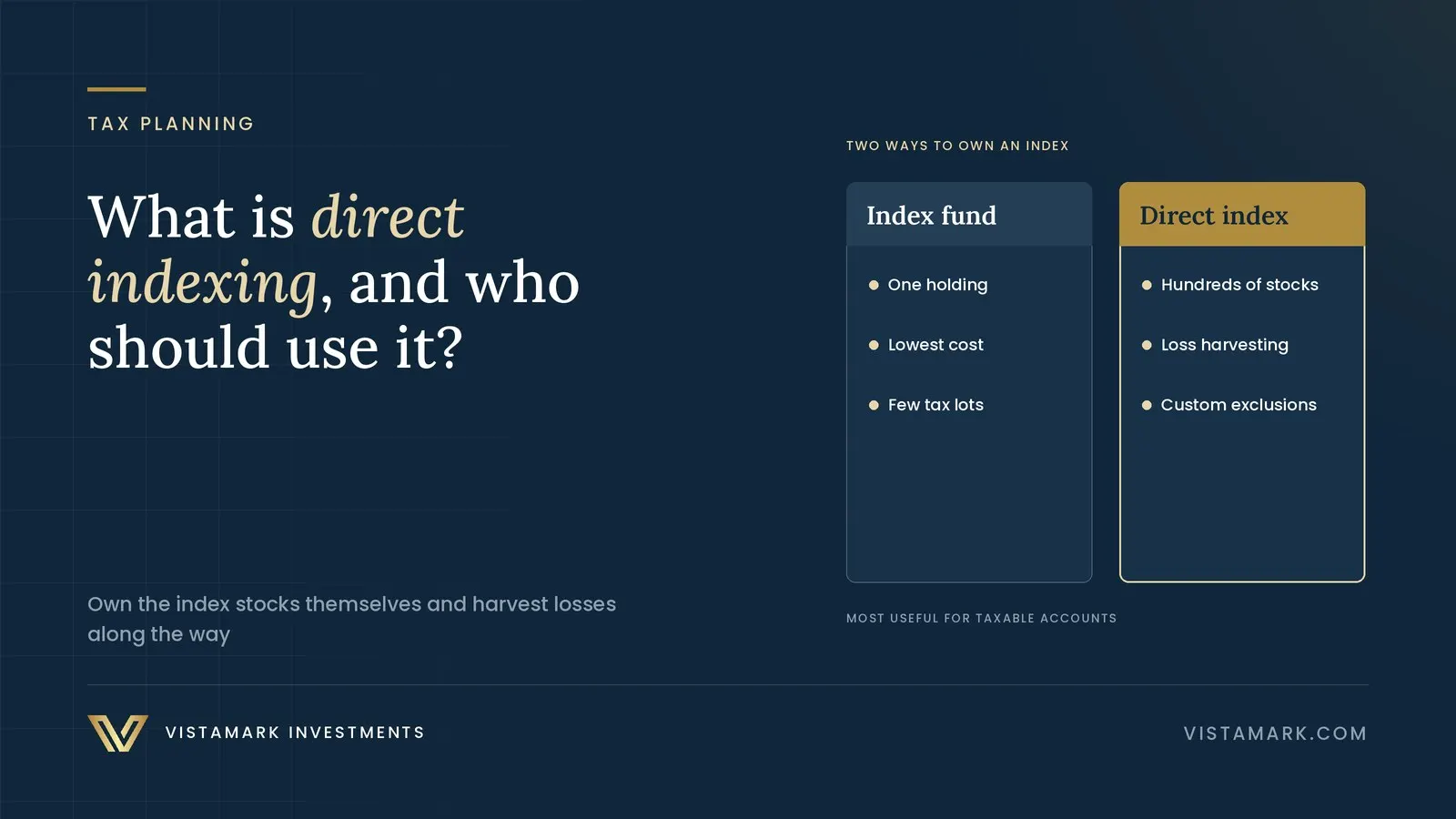
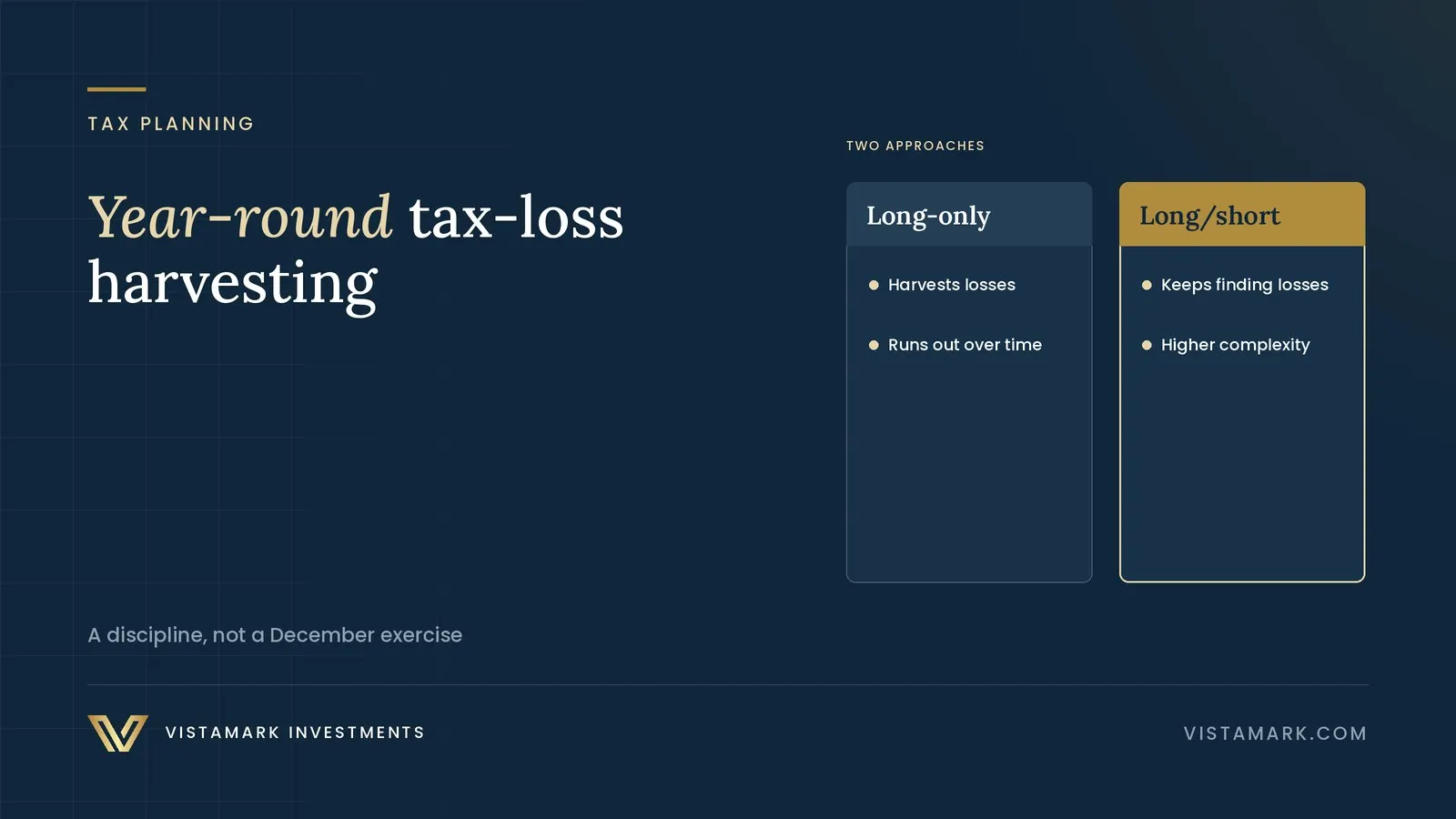
Most investors are familiar with “long-only” tax-loss harvesting. In this approach, investors hold a diversified mix of equities and selectively sell positions that have declined, reinvesting in similar securities to maintain exposure. Over the long run, particularly in rising markets, this process yields fewer opportunities for losses.
For example, in a $1 million long-only account, active tax-loss harvesting might “bank” about $50,000 in losses during a strong year—a meaningful reduction in taxes that supports reinvestment and compounding.
Why does long-only tax-loss harvesting run out of losses?
After several years of market gains, most positions carry unrealized gains instead of losses. The opportunity set for harvesting narrows, and taxes begin to creep back up. That’s the natural ceiling of long-only tax-loss harvesting—effective at first, but limited over time.
What is long/short tax-loss harvesting?
Forward-thinking wealth managers now employ long/short tax-loss harvesting strategies that extend the benefits far beyond a few market cycles. By managing both long and short positions, these strategies generate consistent realized losses even in rising markets.
The result? More predictable, sustainable tax benefits year after year.
Consider this: A client with a $10 million portfolio using a long/short harvesting solution could generate roughly $700,000 in annual realized losses—equating to nearly $285,000 in yearly tax savings. That’s real, compounding value that can strengthen multigenerational wealth plans.
Key Takeaways for Investors
-
Harvesting should complement—not replace—a sound investment strategy focused on risk-adjusted returns.
-
Monitor realized and unrealized losses relative to fees to confirm genuine after-tax benefit.
-
Be mindful of the wash-sale rule to ensure harvested losses remain valid.
The Bottom Line
Year-round, proactive tax-loss harvesting—especially through long/short solutions—can transform how investors build and protect wealth. By unlocking consistent, compounding tax efficiencies, this strategy helps turn the inevitable ups and downs of markets into sustainable, long-term opportunity.
Ready to see how a customized long/short tax-loss harvesting strategy could enhance your after-tax returns? Reach out to our team to explore a solution personalized for your goals.
For more information and personalized guidance, please feel free to reach out to Vistamark Investments. You can contact us at 312-895-3001, visit our website at vistamark.com, or send us an email to info@vistamark.com.
This article is part of our Tax Planning Guide, which collects our writing on the topic with answers to common questions.

Managing Partner and Founder; advises families, business owners and family offices through the VistaWealth Office™ and leads Vistamark’s private markets research. More about Sean →
This article is for informational and educational purposes only and does not constitute investment, legal, tax or accounting advice, or an offer or solicitation to buy or sell any security. Views are those of the author as of the publication date and are subject to change. Vistamark Investments is an SEC-registered investment adviser; see our disclosures.