The short answer. Most endowments and foundations should hold enough cash, Treasuries and high-quality bonds to cover about two years of spending plus projected net capital calls from private funds, and enough public equities on top to rebalance. The right figure comes from a stress test, not a percentage rule: assume markets fall, private funds keep calling capital and distributions dry up, and check that every grant and call can still be paid without selling private assets at a discount. For a $100 million endowment spending 5% with a typical private markets program, that often means $15 million to $20 million in the most liquid tier.
Why does liquidity matter so much for an endowment?
Liquidity is the constraint that decides how much an endowment can own in private equity, private credit and real assets. Too little, and a market crisis forces the sale of good assets at bad prices or a cut in grants. Too much, and the endowment gives up return it could have earned. The 2008 and 2020 market shocks taught many institutions that liquidity planning is part of asset allocation, not a footnote to it.
It is also common to have no written rule. In Cambridge Associates’ fiscal 2025 survey, only 48% of endowments had a formal liquidity policy in their investment policy statement, and another 24% had informal guidelines (Cambridge Associates).
What does an endowment need liquidity for?
- Spending: grants, scholarships or operating support, paid every year regardless of markets. The average effective spending rate for college and university endowments was 4.9% in fiscal 2025 (NACUBO), and private foundations must pay out about 5% a year.
- Capital calls: unfunded commitments to private funds, which can be called over several years.
- Rebalancing: buying assets that have fallen to bring the portfolio back to target.
- Operating needs: debt service, collateral or other institutional obligations.
- Opportunity: the ability to invest when others are forced to sell.
How do you calculate how much liquidity an endowment needs?
Start with a simple formula, then stress it:
Liquidity need = (annual spending + projected capital calls − reliable distributions and gifts) × years of coverage.
Here is an illustration for a $100 million endowment with 25% in private funds and $12 million of unfunded commitments, under a stress scenario:
| Item, per year in a downturn | Amount |
|---|---|
| Spending at 5% | $5.0 million |
| Capital calls (about a third of unfunded commitments) | $4.0 million |
| Distributions from private funds, sharply reduced | −$1.0 million |
| Net cash need per year | $8.0 million |
| Two years of coverage | $16.0 million, or 16% of the portfolio |
The figures are illustrative; your own spending rule, commitment schedule and gift flows set the real answer. The test then asks whether the endowment can meet every obligation from cash, bonds and public equities, keep its allocation within policy ranges, and avoid selling private assets in the secondary market at a discount. If it cannot, the private allocation or the pace of new commitments is too high.
What is a liquidity tier framework?
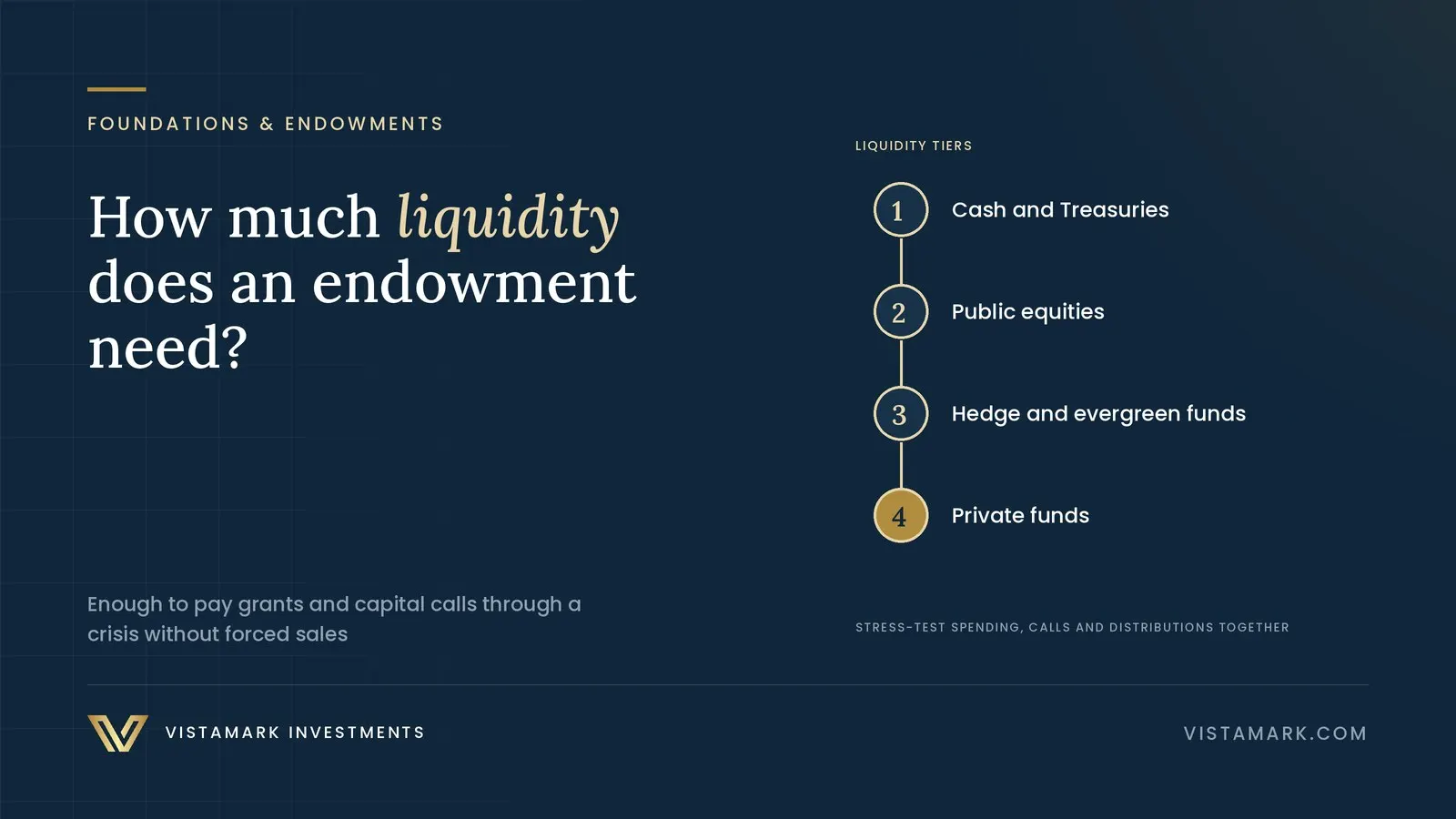
Many institutions classify every holding by how quickly it can be turned into cash at fair value:
| Tier | Typical assets | Available |
|---|---|---|
| Tier 1 | Cash, Treasuries, high-quality bonds | Within days |
| Tier 2 | Public equity funds and ETFs | Within days to weeks, but at market prices |
| Tier 3 | Hedge funds and evergreen funds with periodic redemption | Quarterly or annually, with limits |
| Tier 4 | Private equity, private credit, real estate and venture funds | Years |
The investment policy statement can then set a minimum for Tier 1, for example two years of spending and projected net capital calls, and a maximum for Tier 4 that counts unfunded commitments as well as current holdings.
How do unfunded commitments change the picture?
They are easy to overlook because they do not appear on the balance sheet. In Cambridge Associates’ fiscal 2025 survey, the median ratio of uncalled capital to portfolio value ranged from 9.8% for endowments under $200 million to 14.6% for those between $1 billion and $3 billion, and at some endowments it reached 20% or more. In the same survey, 62% of endowments paid more into private funds than they received back, down from 77% the year before (Cambridge Associates).
Committees should see unfunded commitments reported every quarter, alongside a three-year projection of calls and distributions, and should pace new commitments by vintage year to keep the program steady. Our article on private equity in endowment portfolios explains why the allocation is worth managing carefully.
Should an endowment use a line of credit?
A committed line of credit can provide a backstop, but it should not substitute for real liquidity. Lines can be reduced or withdrawn in a crisis, exactly when they are needed most. If the endowment uses one, the investment policy statement should state its purpose and limits.
Do evergreen and semi-liquid private funds count as liquid?
Only partly. They offer periodic redemptions, but redemptions can be limited or gated when many investors want out at once. A committee should count them as Tier 3 at best and assume limited liquidity in a crisis.
What should the investment committee ask for?
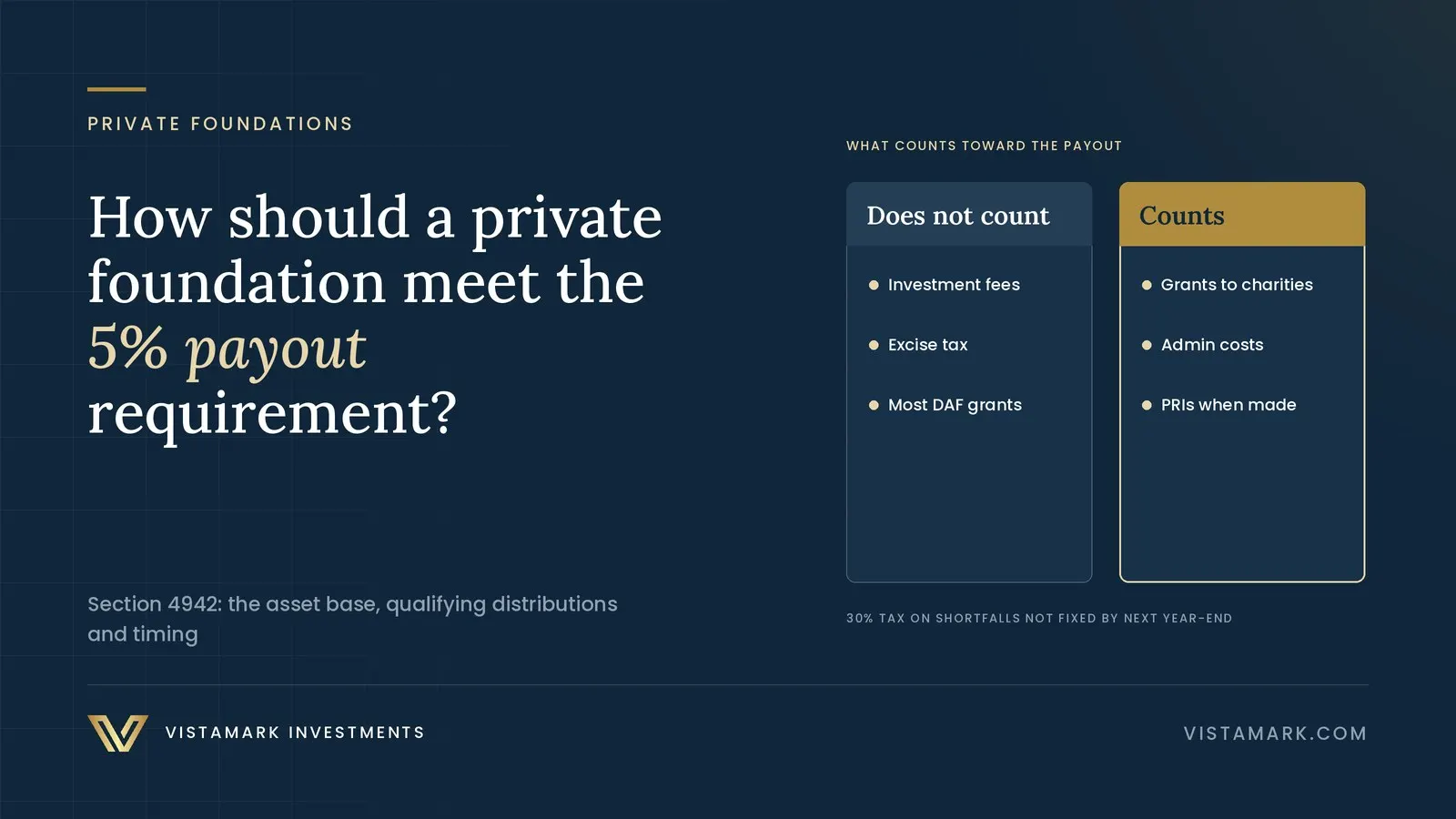
A one-page liquidity report each quarter: assets by tier, unfunded commitments, projected spending, calls and distributions for the next three years, and the result of the stress test. With that report, private markets decisions become decisions about liquidity as well as return. For private foundations, the same report shows whether the 5% payout can be met in a bad year; our article How Should a Private Foundation Meet the 5% Payout Requirement? explains the rule.
Where does Vistamark fit?
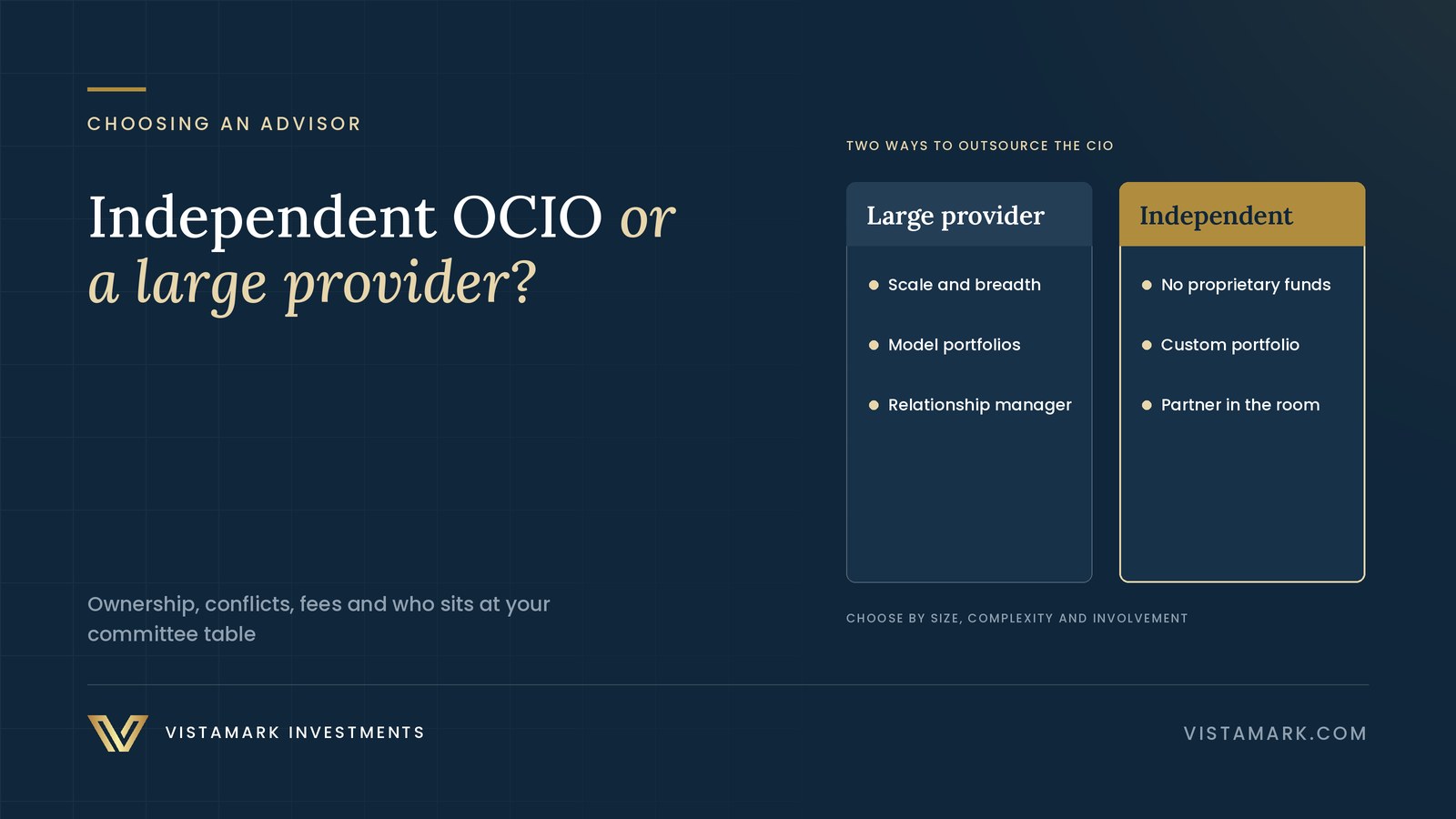
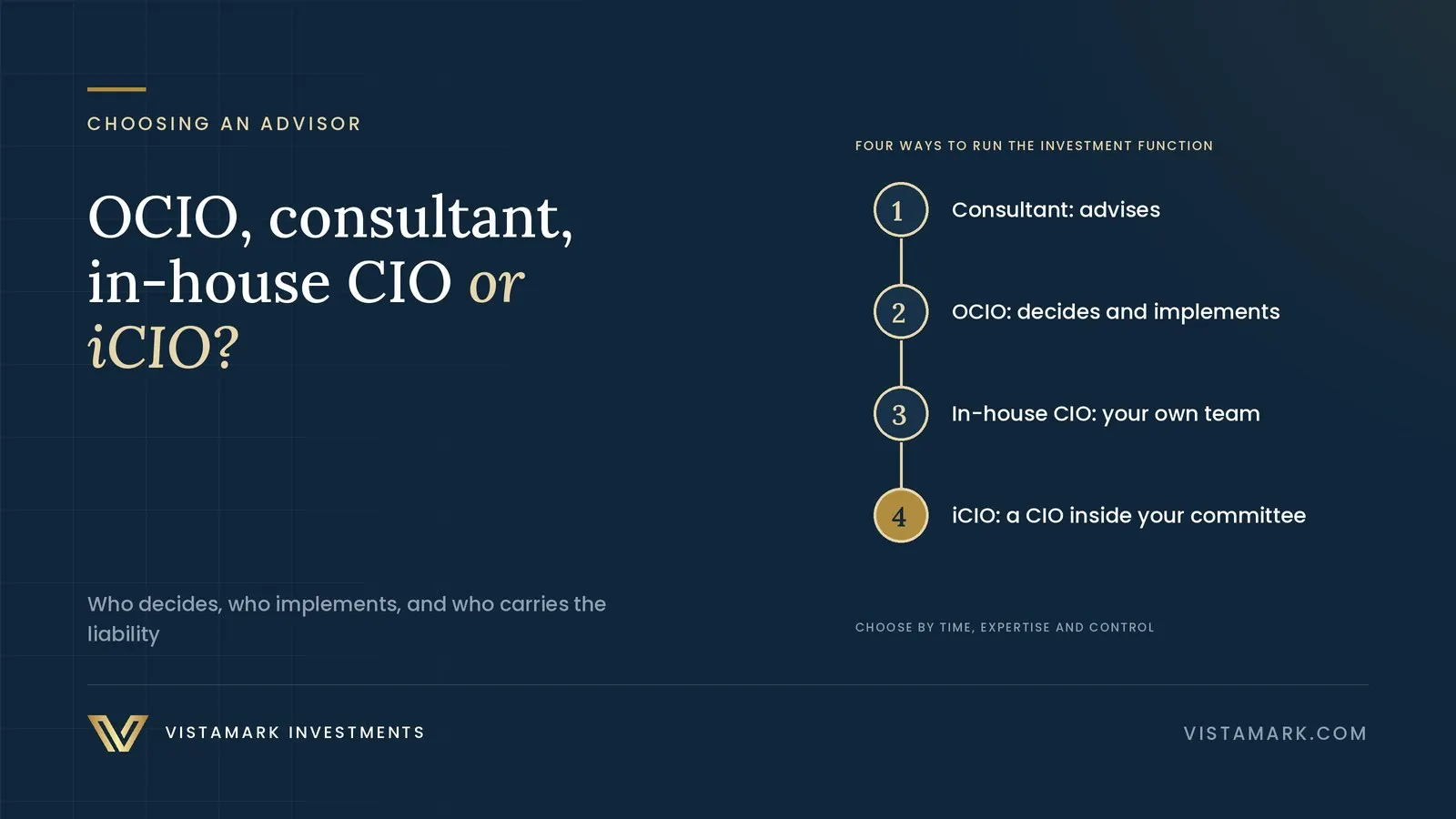
Vistamark is an independent, employee- and partner-owned investment firm based in Chicago and Hinsdale. Its foundations and endowments practice serves as outsourced CIO and investment consultant to foundations, endowments and nonprofits, and builds the liquidity stress test, tier report and commitment pacing plan into each client’s investment policy. Our article OCIO vs. Investment Consultant vs. In-House CIO compares the ways a committee can get that support.
Sources
This article is part of our Foundation & Endowment Investment Guide, which collects our writing on the topic with answers to common questions.

Partner and Director of Institutional Advisory with more than 20 years advising endowments, foundations, healthcare organizations and retirement plan sponsors. More about Ryan →
This article is for informational and educational purposes only and does not constitute investment, legal, tax or accounting advice, or an offer or solicitation to buy or sell any security. Views are those of the author as of the publication date and are subject to change. Vistamark Investments is an SEC-registered investment adviser; see our disclosures.